

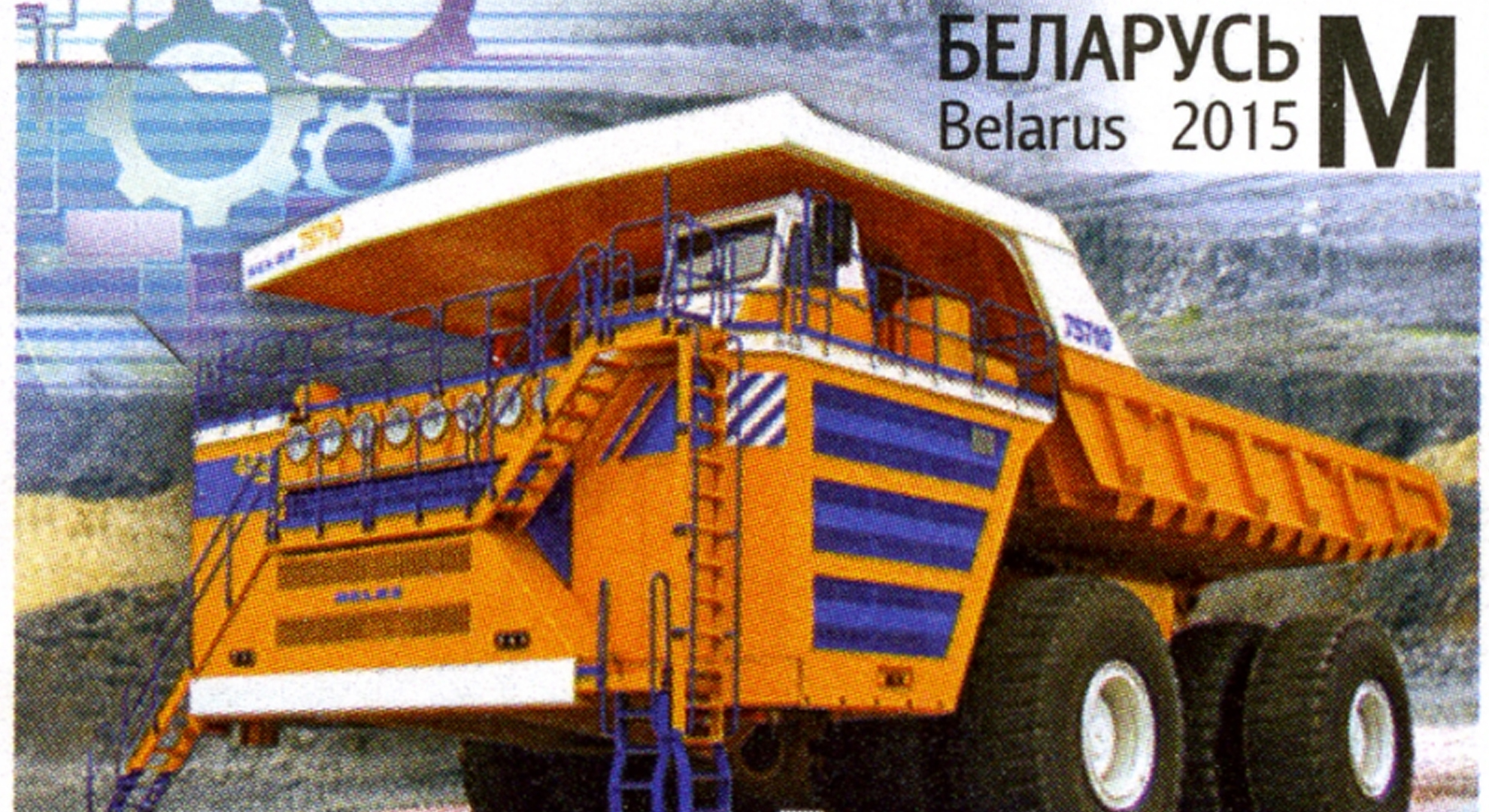
Have you heard of the ultra trucks?
A wonder of technology, some of the largest wheeled vehicles on earth, each one able
to haul over 400 tons of load in a single ride. The ones with 450 tons load capacity are
only manufactured in Belarus, but other “ultra-class” monsters are also built in Germany,
the USA, China and Japan.
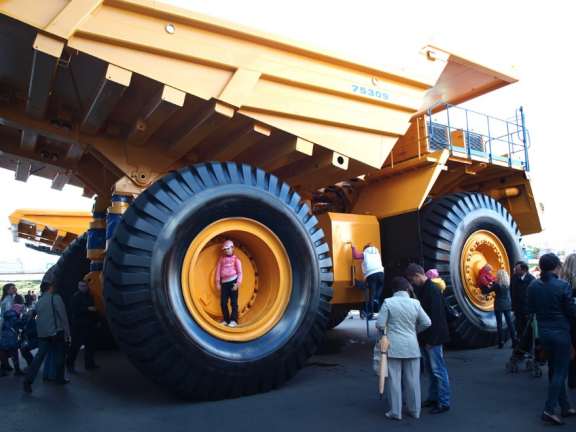
They leave the factory broken down into major components and transferring them to
worksite entails an arduous journey by ship, rail and trucks, taking an entire specialized
crew several weeks to assemble them once delivered. They are destined to spend their
entire lives on site, it’s more expensive to ship them away than just leave them there.
Whatever it is you’re reading this on, unless you copied it on paper for whatever reason,
it takes copper, aluminum, iron and indium, and many other metals to make this
possible. And unearthing these entails – you guessed it – moving a lot of earth.
The purpose of mines is critical. These materials and all others we need to mine for are
everywhere around us, in everything. There’s aluminum in most antiperspirants and tin
in your toothpaste.
Let’s get technical. We’ll run the numbers on earth moved in a gold mine, in a hole that
makes a so call ultra-truck look like an ant.
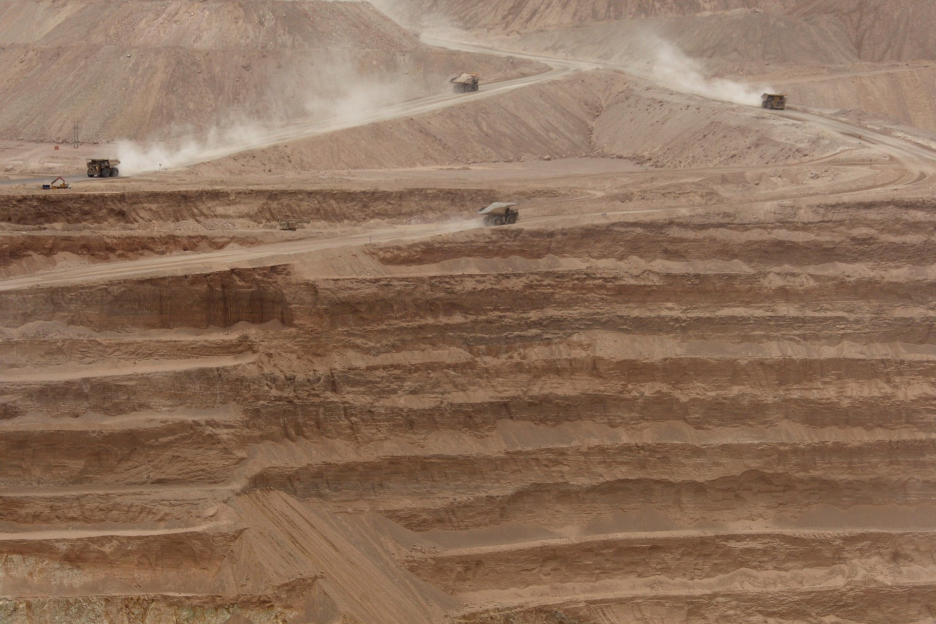
We’re looking at roughly 411 million tons of earth extracted, over about 15 years,
needing a fleet of roughly 6–15 ultra-class trucks depending on the phase, and burning
on the order of 150 million liters of diesel across its lifetime, all to extract an estimated
314 tons of gold and 1,481 tons of silver.
The process of mining involves breaking the extracted rocks down through a highly
corrosive – and inherently pollutant – cyanide solution. The extract gets deposited in the
vicinity of the mine. Paying more to safely deposit residue jeopardizes the revenue
model. We don’t get to choose where natural resources are located, but it is preferable
that extracting them is done far away from densely populated areas – or that population
within the immediate vicinity be relocated.
Roșia Montană is a great real-world case to study — with one big caveat: it was never
built. The project was blocked by the Romanian government after years of protests,
legal battles, and environmental concerns, and in 2021 the site was inscribed as a
UNESCO World Heritage Site, which effectively closes the door on it forever.
This, however, is an essay about all of us. And the short story above, although positive,
is a drop in the ocean compared to the big picture.
The amount of rock moved to obtain relatively tiny quantities of metals like gold is
extraordinary. But by “earth moved” I mean rock, soil, sediment, overburden, etc.
physically excavated and relocated by humans – and the scale is enormous.
Geologists increasingly treat humanity as a geomorphological agent, defined as
something that physically reshapes Earth’s surface, in the same conceptual category as
rivers, glaciers, wind, waves and tectonics.
One widely cited estimate puts the sediment delivered annually by the world’s major
rivers, the conveyor belts of continental erosion to the oceans, at roughly 13 billion
tonnes/year.
A 2018 study, however, estimated that humans were directly moving about
316 billion tonnes/year
We’re effectively disassembling pieces of the earth’s crust, chemically or physically
sorting them, and redepositing most of the material elsewhere. That’s geological activity.
And then we do the reverse: build artificial geology.
The material doesn’t simply disappear. Rock becomes aggregate. Limestone becomes
cement. Sand becomes concrete. Excavated earth becomes embankments. Mining
waste becomes spoil heaps and tailings dams.
Cities are therefore, in a geological sense, enormous artificial sedimentary deposits.
A highway, for example, isn’t just something sitting on Earth’s surface. Building it can
involve excavating hillsides, filling valleys, quarrying aggregate, moving soil, and
depositing layers of gravel, asphalt and concrete.
One analysis estimates that the world’s roughly 64 million km of roads have required
around 200 billion tonnes of sand and gravel just for their construction.
Natural geology is unbelievably powerful—but usually slow. Altogether, geologists
measure time over a 4.6-billion-year scale.
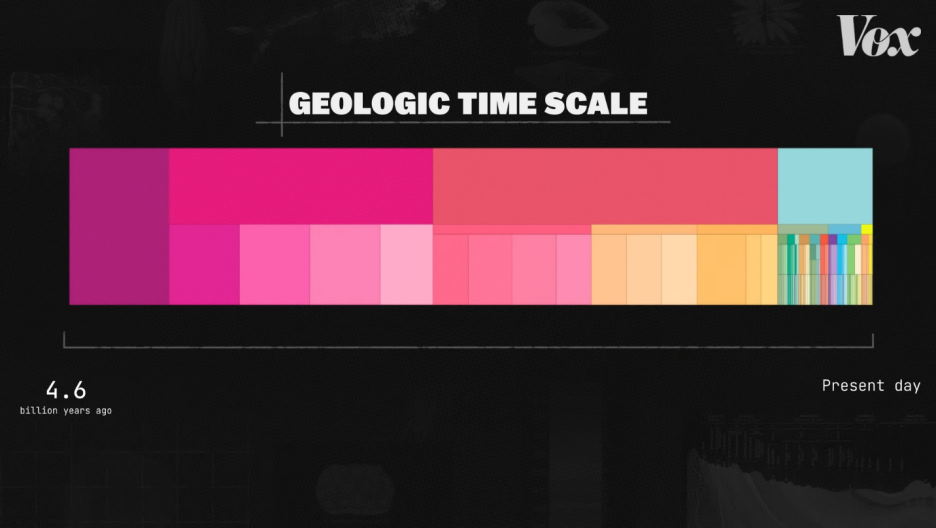
Humans, however, are doing something nature does over billions of years in decades.
Industrial machinery essentially compresses some of these processes into human
timescales. A mountain that erosion might gradually dismantle over hundreds of
thousands or millions of years can have hundreds of millions of tons removed by an
open pit mine over decades.
And this acceleration is extremely recent.
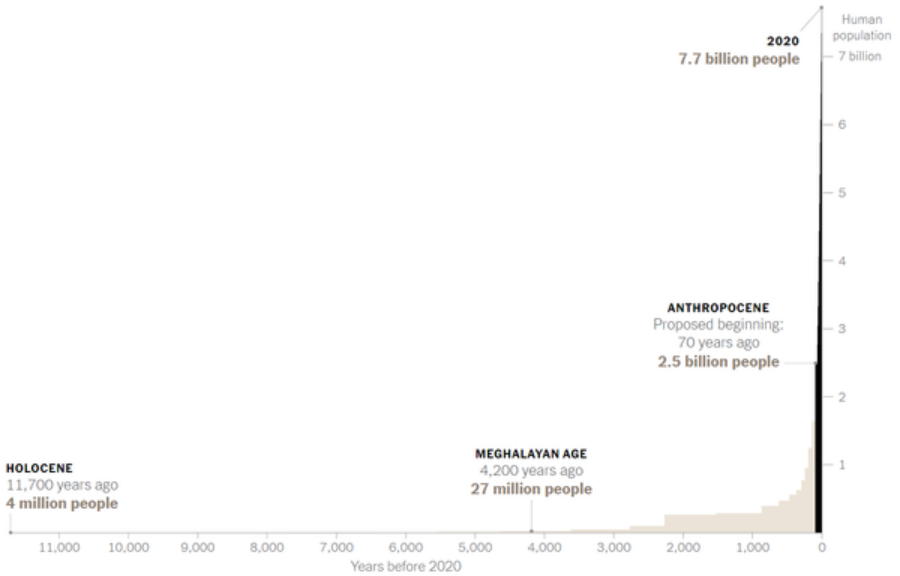
The 2018 reconstruction found that anthropogenic sediment movement accelerated
dramatically after WWII and overtook natural river sediment flux around the mid-1950s.
The main argument against climate change is that the earth’s climate is cyclical, and
that we’re overestimating the impact humans can have on the globe. However, taking a
deep dive into this topic alone, the restructuring of the “earth”, we see that not only is
our impact scientifically as great as that of oceans and rivers, but it’s measurably the
same as their in a timeframe of approximatively 70 years. The difference in this cycle is
that it’s much shorter, and entirely attributable to us.
Sources:
1*
By Post of Belarus –
http://www.wnsstamps.post/en/stamps?utf8=%E2%9C%93&search[authority_id]=21&se
arch[year]=2015&search[month]=&search[theme_id]=&search[freetext]=&search[order_
by]=asc, Public Domain, https://commons.wikimedia.org/w/index.php?curid=42533288
2*
https://belarusholiday.com/en/tours/industrial-tourism/belaz
3*
https://qz.com/1326718/photos-how-mining-shapes-the-earth-seen-in-aerial-satellite-
and-iss-photography
4*
https://www.youtube.com/watch?v=Oh2RevEsyoI
minute 1:22
5*
https://www.nytimes.com/2023/03/16/learning/whats-going-on-in-this-graph-march-29-
2023.html
https://www.sciencedirect.com/science/article/abs/pii/S0009254197001496 – amount of
earth moved by geomorphological agents
https://journals.sagepub.com/doi/10.1177/2053019618800234
amount moved by humans