

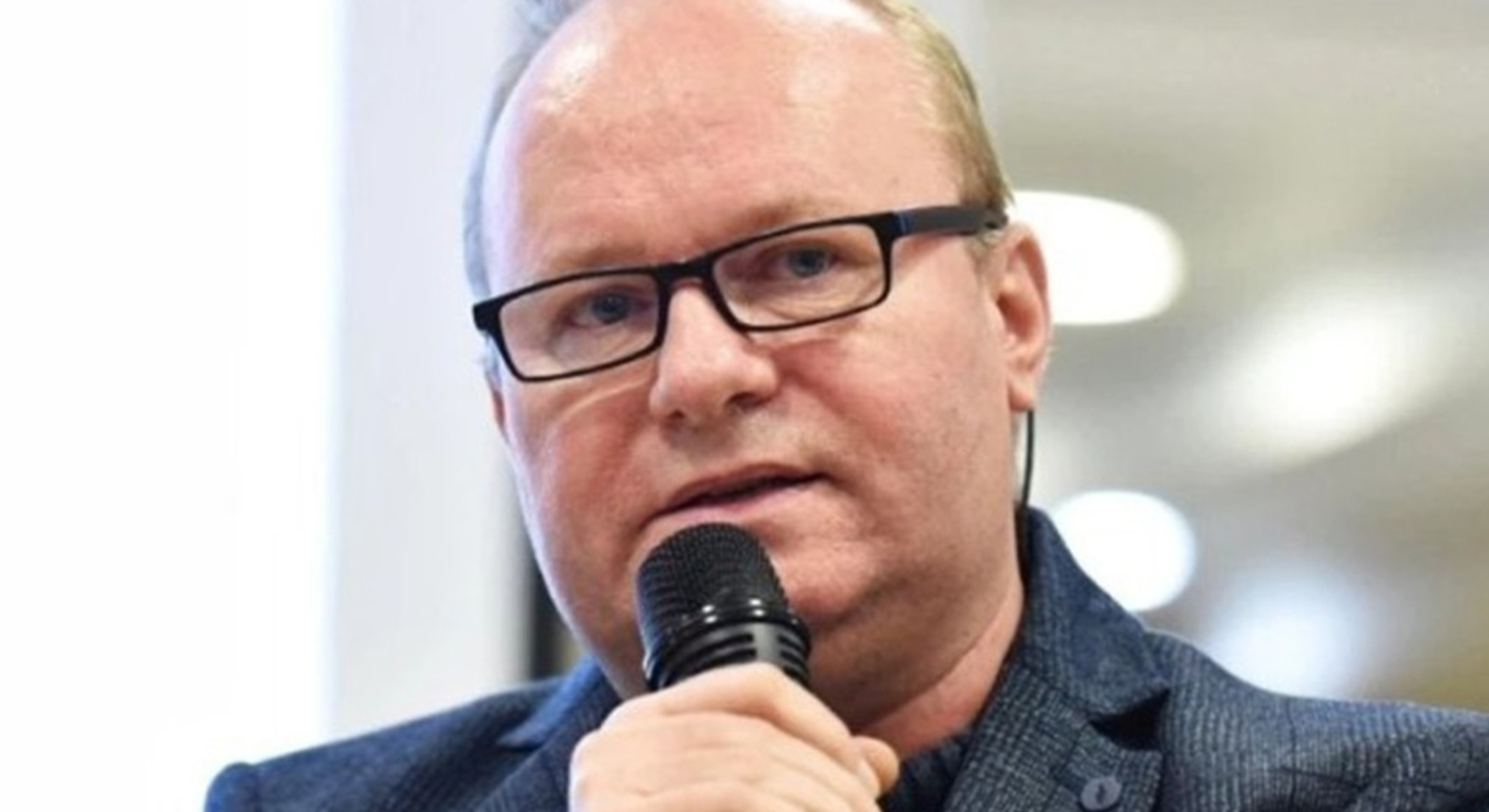
Rising oil prices on international markets will fuel inflation in Romania in the coming months and will put pressure on household budgets, in the context of high dependence on fossil fuels and insufficient investment in alternative energy sources, economics professor Cristian Păun told Agerpres.
The price of a barrel of Brent North Sea Brent crude oil climbed by almost 19% to 111 dollars on Monday morning, after already rising by about 28% last week, amid investor fears that the prolongation of the Middle East war could severely disrupt energy markets and hurt growth in the global economy.
„I expect this price to stabilize in the coming period and slowly, if things work out there, the oil price to recover. What is the impact of this price increase in Romania at the moment? It will certainly fuel inflation. At least in these months of the year, inflation will be higher than forecast. We were expecting prices to moderate slowly, especially towards the second half of the year, and to see much lower prices compared to the previous year. Unfortunately, such an event shakes us harder than other countries, because we are not very prepared and we don't have the energy independence from hydrocarbons that other countries have, which have invested heavily in electricity, batteries and all sorts of alternative solutions - electrified public transportation, bicycle paths and so on,” said Cristian Păun.
According to him, Romania has not made such investments, so our country's energy dependence on hydrocarbons is very high.
At the same time, he emphasized that the car fleet in Romania is much older than the EU average, which means higher consumption of fossil fuels, hydrocarbons, compared to other countries.
„This will certainly lead to an even greater impoverishment of Romanians and, obviously, to an even greater pressure on the budget of each family, and without our reactions, without adapting to this situation, the problem will be quite complicated. We have to understand that, little by little, urban transport will have to rely more on electric cars, bicycles, scooters, walking, public transport and less on these hydrocarbon cars. We need an even better infrastructure of everything that means electric charging stations, including on public spaces. More real facilities are also needed for Romanians who install solar panels and who seek this energy independence through the investments they make. For the time being, we are quite amateur in everything that means public policies to save us and make us more resilient in the face of such crises,” said Cristian Păun.
In his view, if the conflict is resolved quickly, things are likely to return to normal. However, if the conflict drags on, the price will probably stabilize somewhere around today's values for quite some time, and then it will be up to each of us to find solutions to these very high pump prices.
„Of course, the state can do something: it can reduce taxation on these energy, gas and fuel products, especially for agriculture; it can consider lowering excise duty, no doubt about it. It's a very good solution, except that we need to get approval from the European Union for this reduction in excise duty. Or perhaps, if things take a turn for the worse, to rethink the application of VAT to these products and come up with a differentiated VAT, so that for a while we do not pay this high VAT, we pay a VAT of 10%, for all these products. Maybe even a lower excise tax and, in this way, we would keep prices under control and avoid an additional inflationary spike, which would create even bigger problems than we have at the moment,” added the economics professor.
The rise in oil prices will be reflected in prices as products are transported and agricultural products are made with fuel.
„All these elements will eventually end up in the price, but not by a huge percentage, because in addition to the cost of transportation, there are other costs. The percentage won't necessarily be very high and because Romanians can't really take the money out of their pockets to pay the prices that entrepreneurs are thinking of, taking into account all these increased costs. It is also not easy for the entrepreneur to include in the price all these cost increases he has. Now the state is even discussing the idea of raising the minimum wage, which would be the wrong decision. When there is so much pressure from energy, gas, oil and fuel, to increase the minimum wage is a very bad idea”, says the economist.
In his view, geopolitical crises in energy-rich areas show how vulnerable oil and gas-dependent economies remain.
„I don't understand why we haven't learned from the war in Ukraine that these nations sitting on the world's oil and gas reserves are not at all peaceful and tranquil and that there will always be a problem and it will only get worse as these resources become scarcer. It is, how can I say it, silly to think that the future will still belong to hydrocarbon, fossil-fuel cars, and that we should do absolutely nothing to remedy this problem. From my point of view, the situation will be difficult in the coming period for every Romanian”, emphasized Cristian Păun.
At the same time, he expressed hope that the resolution of the conflict will happen fairly quickly, and that Iran will give in to international pressure - and we will see a regime change, because „that tyrannical, terrorist regime is not at all a source of peace and hope, and we have seen how much harm it can do to the Middle East”.
„These blows that Iran is striking today against the countries in the region are quite illogical and very much steeped in terrorism and terror. Iran doesn't produce very much oil there; it produces about 101TPTP3T of the Middle East's oil production. Saudi Arabia, along with the United Arab Emirates, Kuwait, Qatar and Iraq are currently producing the most. They together produce over 601TPTP3T of the region's oil, of which Saudi Arabia produces the most, but we have this problem of the straits there. We don't get our supply from that strait; we have an alternative source, Azerbaijan, which has nothing to do with this conflict. It had more to do with the attack on Ukraine by Russia, which is why then the prices went up more, even though the increase in the price of oil on the global market was not that much. We have already passed that maximum threshold, we are now at 120 dollars a barrel, up from 117 dollars a barrel, which was the maximum then, but then we had a much bigger increase at the pump than what we see today, precisely because our sources of supply are not as dependent on the Middle East as they were then. Then, as now, we were quite dependent on Azerbaijan, which is not necessarily in the direct conflict zone,” explained Păun.