

I love movies. I have about 1,400 movies logged as watched on Letterboxd, all done in a 2-day frenzy of marking what I’d seen, out of curiosity for the ballpark figure.
I watched the Chernobyl miniseries with my family over a weekend when it came out. Fascinating stuff. We paused repeatedly so my parents could tell us stories of what they remembered from back then. My mom said they were given iodine pills at school after the accident, being told it was “for health”. In truth, it was to reduce the effects of the nuclear fallout. The show earned 10 Emmy Awards, 2 Golden Globes and 9 Baftas.

https://www.hollywoodreporter.com/news/general-news/chernobyl-wins-best-limited-series-emmy-awards-2019-1241850/
Had a watch party for the Fukushima miniseries too when it came out four years later, in 2023. Although not nearly as popular, with no awards earned, still a decent watch.
There are books, urban legends, and social media trends around nuclear disasters. I have an adventurous friend who even visited the reactor site and was very proud to talk about it. There were people a while back who photographed themselves at ‘the claw’, a machine used to move radioactive material immediately after the disaster, which is still extremely dangerous to come near today.

https://www.news.com.au/technology/environment/the-claw-of-chernobyl-most-dangerous-thing-in-the-exclusion-zone/news-story/533246f01b396bd8deb106c315aecf61
The point I’m trying to make is simple. Nuclear disasters are very popular. And I believe there are some interesting reasons for that.
My childhood friend, Wikipedia, has an article entitled “List of environmental disasters” which enumerates a whopping 211 entries, broken down into 12 categories. The 12 entries on nuclear disasters represent 5.69% of the total. While it is true that this list is quite extensive, “if you feel the list is incomplete, feel free to expand it”. There’s stuff here like “dirty dairying in New Zealand” or “Nurdles”.
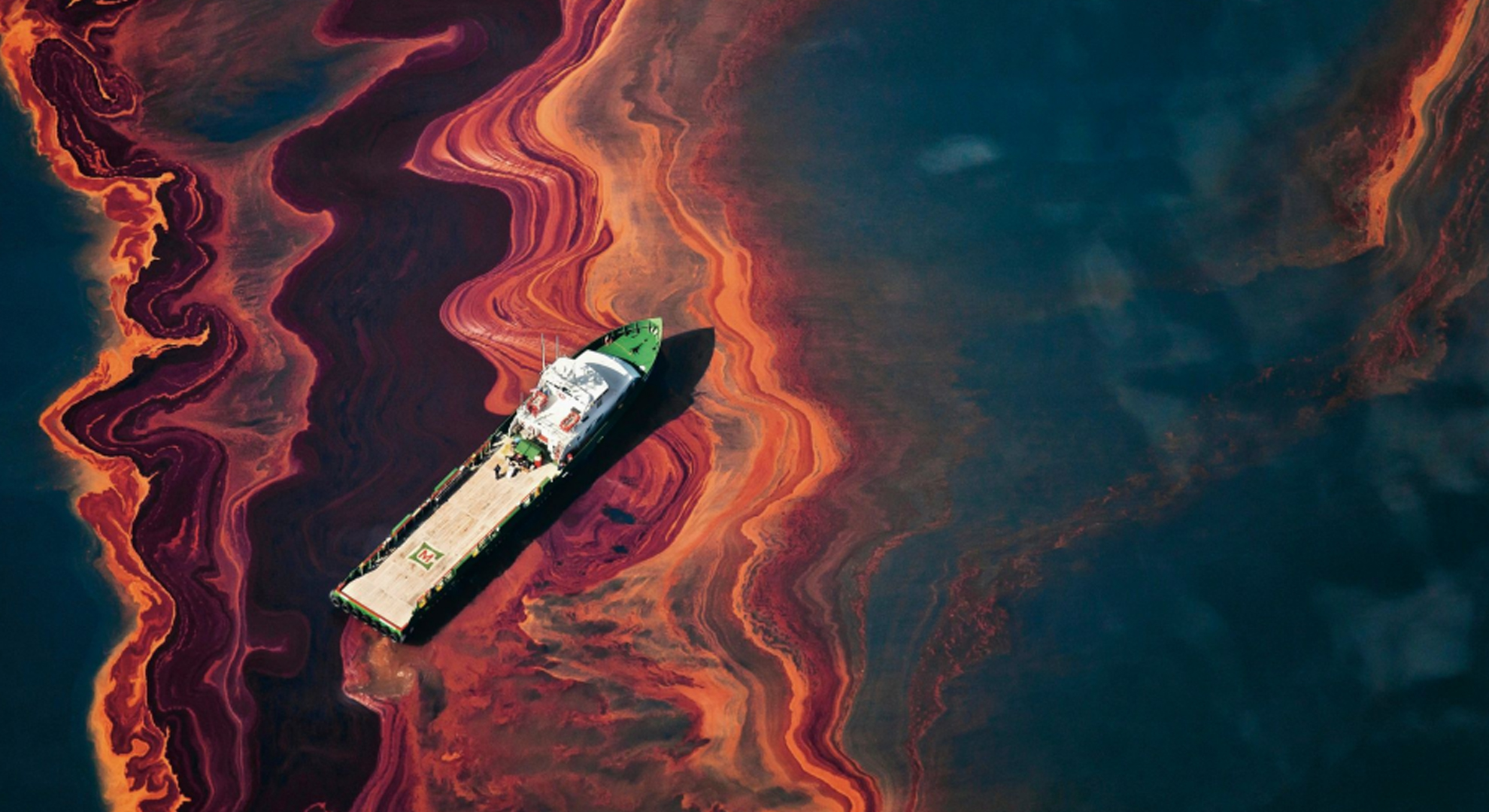
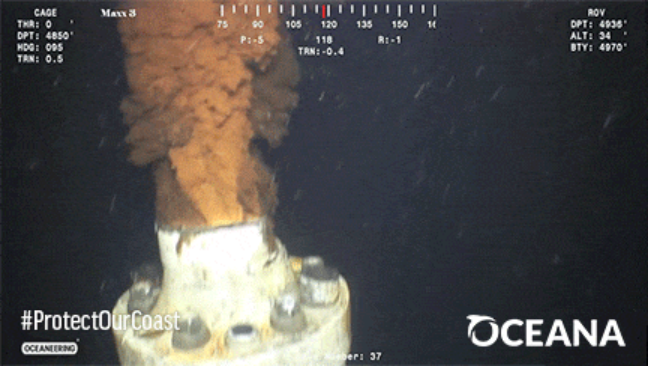
However, jokes aside, the oil industry section has 35 entries. Despite the oil section being nearly three times as long as the nuclear one, the ecological impact of oil disasters seems to occupy far less space in our public awareness. There’s 2016’s Deepwater Horizon, a thriller focusing on the 12 hours leading up to the explosion and the crew’s efforts to escape the burning oil rig. Still, nothing on the environmental disaster it caused. On April 20, 2010, an explosion occurred on British Petroleum’s Deepwater Horizon offshore rig that killed 11 workers and sank the platform. With the safety shutdown system on the ocean floor failing, the uncapped well leaked oil into the Gulf of Mexico for 87 days, discharging an estimated 4.9 million barrels (210 million gallons) of crude and becoming the largest marine oil spill in history.
https://news.mongabay.com/2025/04/15-years-after-the-bp-oil-spill-disaster-how-is-the-gulf-of-mexico-faring/
There are objective ways to measure the impact of both oil and nuclear events.
The International Nuclear and Radiological Event Scale (INES) is a specialized scaling system established in 1990 by the International Atomic Energy Agency. Headquartered in Vienna, Austria, this organization is funded publicly by world governments.
There’s no equivalent to the INES scale for oil spills. Their environmental impact depends not only on the quantity spilled, but also on the type of oil, the ecosystem affected, environmental conditions and the sensitivity of local habitats.
There is, however, the International Tanker Owners Pollution Federation (ITOPF). Founded in 1968 in the wake of the 1967 Torrey Canyon spill of approximately 119,000 tonnes of crude oil, it is funded by the world’s leading shipping companies and operates as an independent technical advisory organization.
Comparing ITOPF to the IAEA isn’t entirely fair. They don’t do the same job. ITOPF provides scientific expertise on oil spills, their environmental effects and how they should be cleaned up. The IAEA, meanwhile, is an international organization created by governments with a much broader mandate. Through international treaties and safeguards agreements, it monitors nuclear material and has legally established rights to inspect and verify nuclear activities in participating states.
Neither is some sort of international police force. ITOPF doesn’t regulate the oil industry and the IAEA can’t simply order governments around. But the difference is still interesting. Nuclear energy has a dedicated international watchdog, international treaties, inspectors and even a neat scale from 0 to 7. Oil spills are regulated too, but responsibility is spread across maritime law, governments, compensation funds, shipping companies and organizations like ITOPF. There is no single international watchdog looking over the whole thing.
Going off one Wikipedia list to measure oil spills versus nuclear incidents is in no way an exhaustive scientific method. Nuclear fallout travels over vast territories, and nuclear incidents are both more varied and more frequent than we tend to be aware of. Under international maritime law, responsibility for tanker oil spills is placed primarily on the shipowner and is generally strict.
If we take a closer look at the two most “famous” incidents, Chernobyl and Deepwater Horizon, crude as the comparison may be, some interesting outlines emerge.
An exclusion zone of roughly 5,000 square kilometers was eventually established around Chernobyl, across Belarusian and Ukrainian territory. Roughly 150,000 people were displaced permanently from this area. Scientists at the time envisioned that the exclusion zone would eventually look like an apocalyptic desert. However, 40 years after the incident, a somewhat uncomfortable picture has emerged: the absence of human presence does more good to the region than the radiation does bad. This land has become one of Europe’s largest wildlife sanctuaries.

Over the course of the Deepwater Horizon incident, oil spread across a cumulative ocean surface area of approximately 112,000 square kilometers.
What’s more, much of the damage was done on the ocean floor, not just on its surface. All that water in between the surface and the floor didn’t do too well either.
Fifteen years after the event, recovery is slow and the overall outlook remains grim. There is no turnaround comparable to what happened in the Chernobyl exclusion zone. Here, it’s mostly just bad.
If you want to fully understand what happened in this spill, read about it on Encyclopaedia Britannica. They have a good summary of it. Don’t watch the movie though.
https://www.britannica.com/event/Deepwater-Horizon-oil-spill
My point is simple. For how much damage oil spills seem to cause, our fears and public discourse remain focused on nuclear energy, while concerns over oil seem to have become a fad of the early 2010s. I’m curious to one day see the Hollywood blockbuster about the spill, the cleanup efforts and the damage done.
Sources:
Wikipedia list of ecological disasters: https://en.wikipedia.org/wiki/List_of_environmental_disasters
The IAEA: https://www.iaea.org/topics/non-proliferation-treaty
The IAEA INES scale: https://www-news.iaea.org/InesScale.aspx
Non Proliferation Nuclear Treaty: https://www.iaea.org/newscenter/news/npt-turns-40