





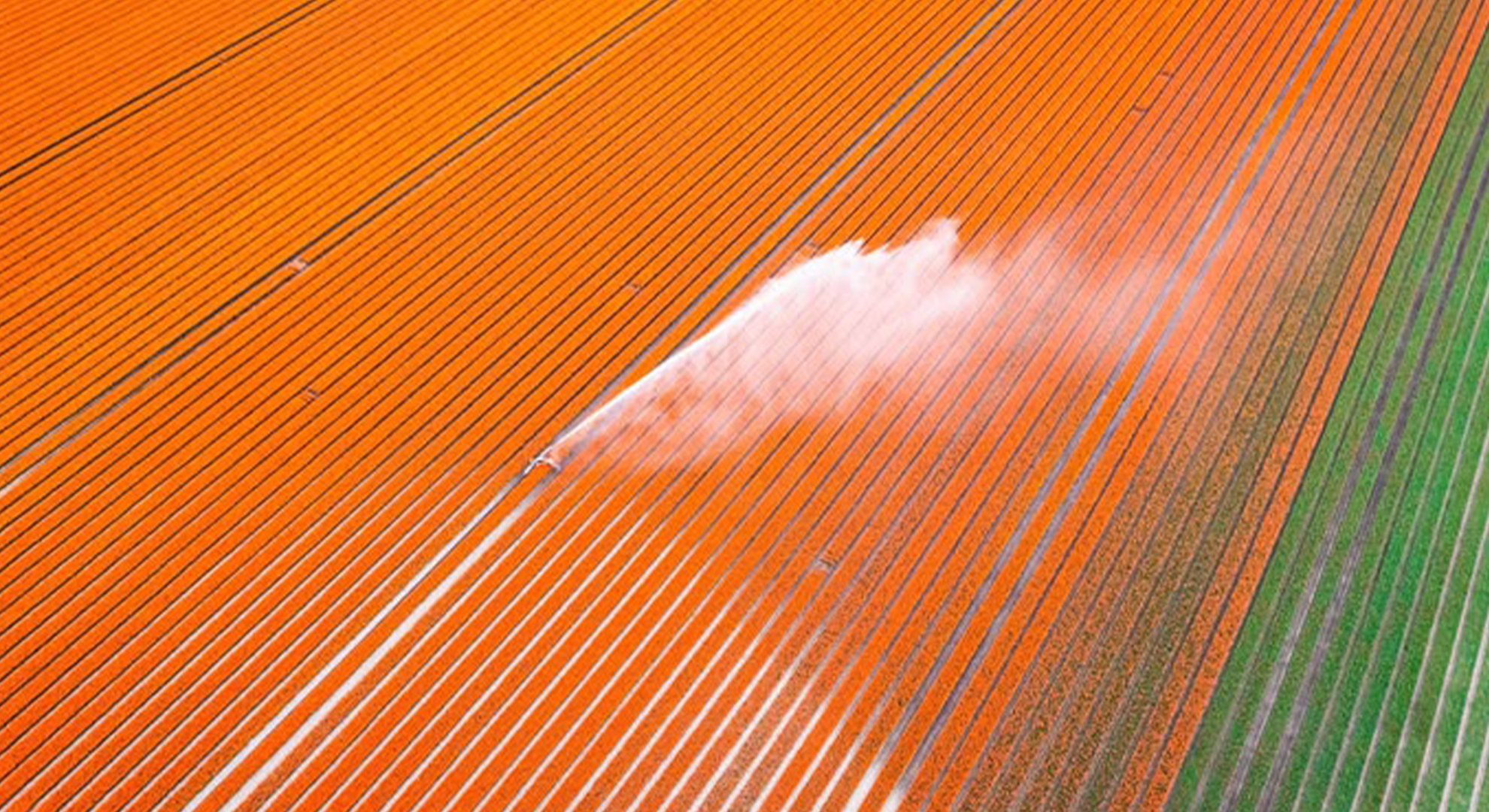
Salad is mostly relegated to the stuff that makes our food plating nice nowadays. We tend to sweep it to the edge of our plate with the tip of our fork and leave it there.
If bought, it spends its days in the fridge drawer marked “fresh vegetables” until it spoils and we replace it with a new and pretty one.
According to the World Wildlife Fund, around 45% of the fruits and vegetables grown globally are wasted. (1) Set aside for a second the tragedy of food waste amidst a world hunger phenomenon, there is a hidden cost here that calls for significant attention. Water.
Cows are more disciplined. Cows don’t waste their feed, they munch on it with appreciation, excited to grow up to be a hamburger.
Alfalfa is an exceptional, high-protein, calorie-dense forage for cattle. Known as lucerne in Europe, it is grown across more than 80 countries, on roughly 30 to 35 million hectares of land. The top 3 producers in the world are the United States, China, and Argentina. Together, they account for half of total global production, with the US leading with 22%. (2)
This crop requires a lot of water. It has deep roots and transpires a lot of water through its leaves, so growing it requires substantial irrigation.

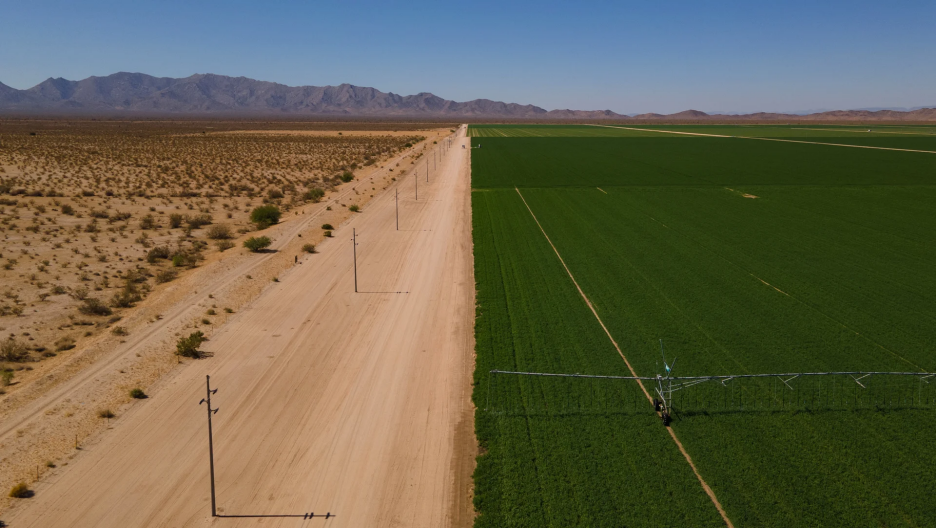
Still, depending on harvesting, handling and storage conditions, 10–30% or more of dry alfalfa can be lost before it ever reaches the cow. (3) Furthermore, the WWF study states that around 5% of global beef products are wasted.
We are well into a global water crisis. On the 20th of January, this year, a United Nations University report declared a global era of water bankruptcy. (4)
This isn’t to say agriculture is evil and inherently wasteful. The topic of water insufficiency is well known and continually escalating, as is the case with most (not all) ecological and environmental crises.
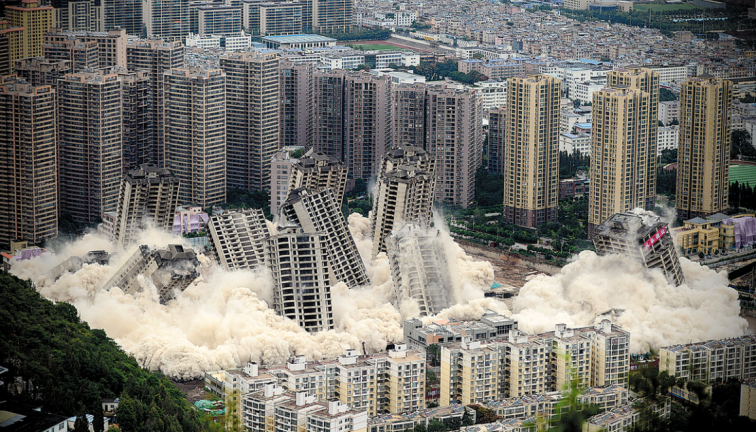
Construction takes up a massive amount of water. Cement, the quick and easy fix of an ever-growing and shifting world population, is composed of 12-21% water by volume. (5) And construction can also be wasteful in several other ways. Fifteen high-rise buildings were demolished in August 2021 in Kunming, Yunnan province, having been sitting unfinished for seven years. (6)

Before I conclude this non-sequitur, I want to mention the last item most commonly associated with water waste in contemporary public discourse and internet humor: AI data centers. By 2027, AI-related data centers could withdraw 4.2–6.6 billion cubic meters of water annually, amounting to roughly 4–6 times Denmark’s total annual water withdrawal. That’s 4.2–6.6 trillion liters per year. (7)
Despite this enormous quantity of forecasted consumption, surprisingly little research quantifies how much of that consumption is avoidable waste. The currently available accurate measure for inefficiency is at the individual cooling-system level, where the US Department of Energy guidance shows that increasing cooling-tower cycles of concentration from three to six can reduce makeup-water requirements by 20%. (8)
And with that, I circle back to agriculture.
The Netherlands is the undisputed champion of European agriculture. It exported 137.5 billion euros in agricultural goods in 2025, up from 93.1 billion euros in 2020, with the export value observing almost uninterrupted growth over that yearly period. (9)

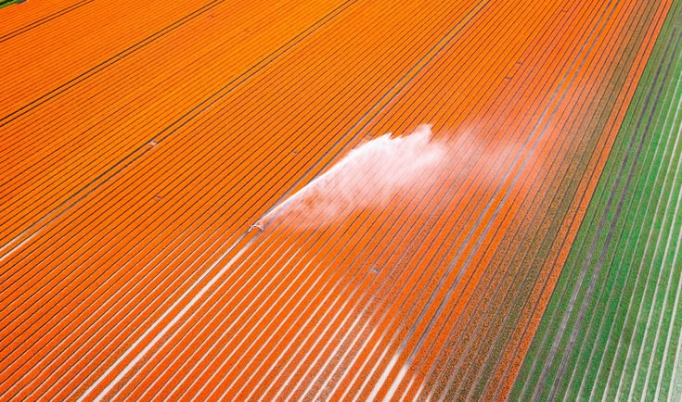
A country with little farmland to spare managed to innovate to excellence, keeping in tone with the strict EU legislation on sustainable agricultural practices.
The immediate access to clean water in high-income economies created a dissociative chasm in the perception of average consumers between the perceived availability and true scarcity of the resource. Not only is clean drinking water scarce, but it is also a key ingredient in most processes foundational to global economic development.
I don’t advocate for an abrupt stop to progress, nor do I believe anarchical disruption is an effective way to redress wasteful developmental practices.
I seek to call attention to the fact that sustainable business practices can add positive value to the bottom line of a venture. We can save water without losing business.
- https://wwfint.awsassets.panda.org/downloads/wwf_uk__driven_to_waste___the_global_impact_of_food_loss_and_waste_on_farms.pdf
- https://www.marketresearchfuture.com/reports/alfalfa-market-8508
- https://extension.okstate.edu/fact-sheets/print-publications/e/e-826-2018.pdf
- https://unu.edu/inweh/news/world-enters-era-of-global-water-bankruptcy
- https://wedocs.unep.org/items/8fbf878c-7136-4864-8d88-ee929f591c76
- https://www.chinadaily.com.cn/a/202109/03/WS6131506ea310efa1bd66cfda_5.html
- https://arxiv.org/abs/2304.03271
- https://www.energy.gov/cmei/femp/cooling-water-efficiency-opportunities-federal-data-centers
- https://www.cbs.nl/en-gb/news/2026/03/value-of-agricultural-exports-up-by-over-8-percent-in-2025


