





Romania is becoming one of the strategic markets for renewable energy investments at the European level, with projects in development and long-term expansion plans. In an exclusive interview with IndustryNews.ro, Adrian Dobre, Country Manager of Eurowind Energy in Romania, states that the group allocates between 300 and 400 million euros annually for local projects and emphasizes that „we are here for the long term.” Adrian Dobre will be a speaker at the Solar Energy Bucharest Summit, organized from April 22–23, 2026, at the Palace of the Parliament.
Eurowind Energy is present in several European markets. What does the company's global strategy look like at this moment, and what role does Central and Eastern Europe play in this strategy?
Eurowind Energy currently operates in 16 European markets, with an operational capacity of 1.5 GW and 1.3 GW under construction, representing cumulative investments of approximately 2.5 billion euros. The company's strategy has been focused on early entry into high-potential markets, and Central and Eastern Europe represents one of the main growth directions today. Romania is one of the group's four main markets, alongside Poland, Germany, and Denmark.
The company does not pursue a rapid build-and-sell development model, but rather a long-term presence, with a focus on the stability of the regulatory framework and the development of strong local partnerships.
What are Eurowind's main global development directions – are we talking more about wind, solar, or integrated solutions with storage?
The strategic direction is the development of integrated energy systems, combining wind and solar power generation with energy storage. The objective is to deliver energy as close as possible to a constant, „baseload” profile, 24/7.
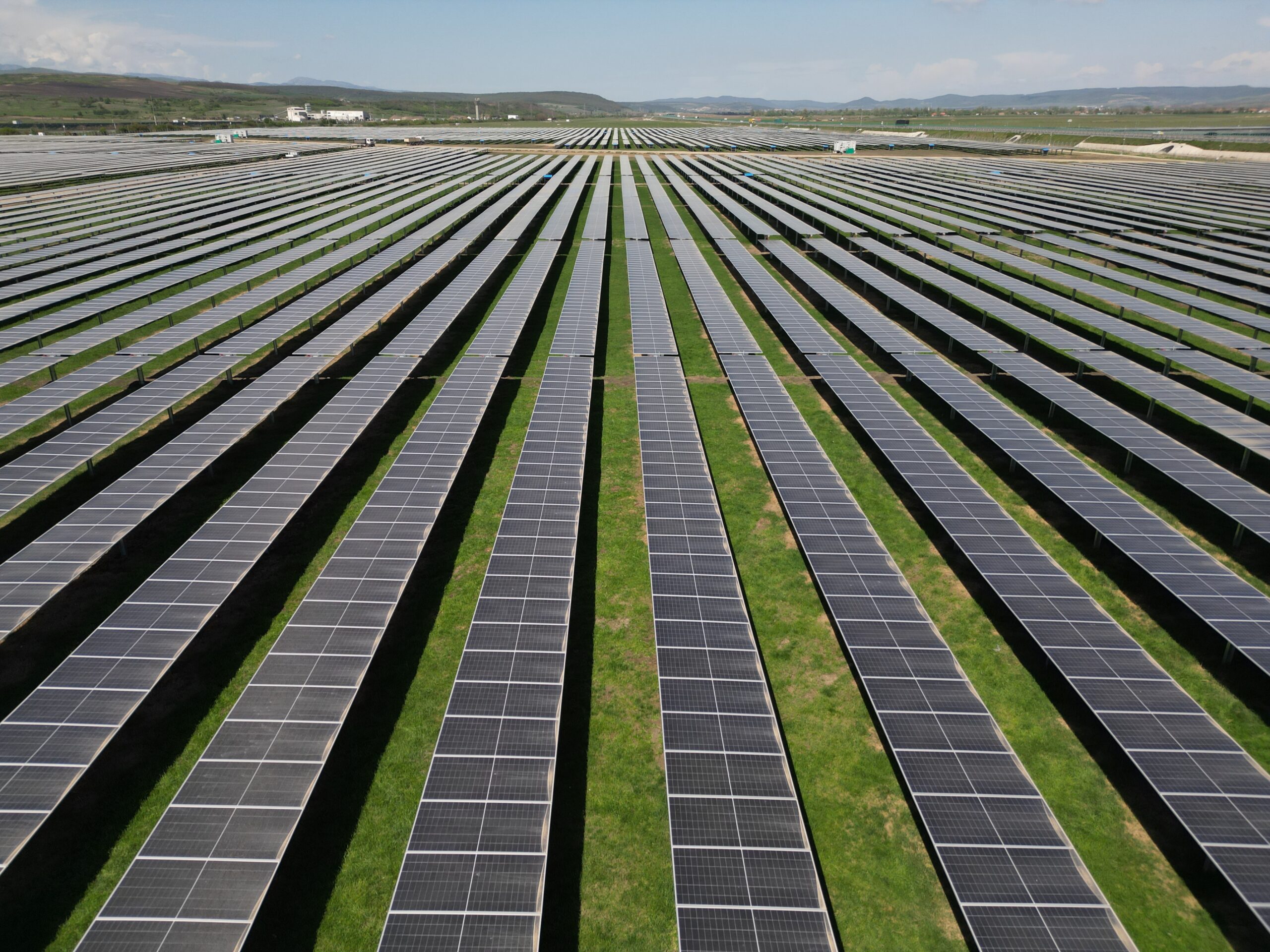
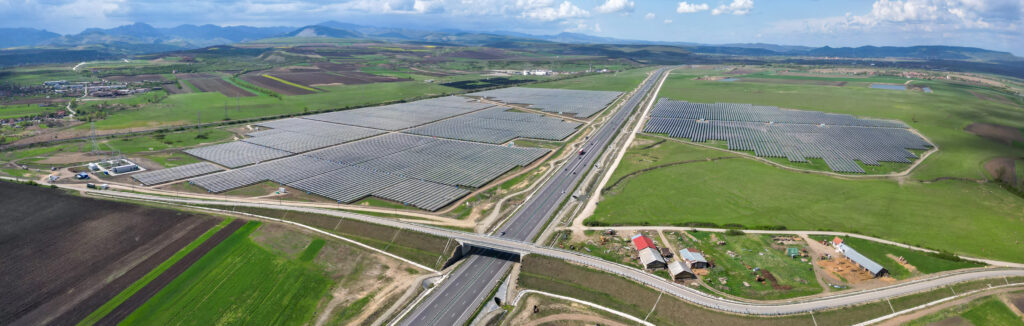
The company is developing hybrid power plants where multiple technologies are integrated at the same grid connection. Local examples include the project in Teiuș, where a photovoltaic park is complemented by a battery storage system, and the project in Siminoc (Murfatlar), a hybrid wind-photovoltaic park estimated for commissioning in 2028.
Where does Romania position itself within the Eurowind portfolio, and what are the most important projects currently under development?
Romania is one of the group's four main markets, and approximately one-third of the total investments – the equivalent of 300–400 million euros annually until 2030 – are directed towards this market.
By mid-year, the company will operate 124 MW and 120 MWh of storage in Romania, and by 2030, the goal is to reach a capacity of 1 GW in solar, wind, and storage. Major projects include the photovoltaic park in Vișina (around 260 MW) and three wind farms in Galați and Constanța counties, totaling 138 MW.

How do you assess Romania's current pace of renewable energy development?
Romania has recovered some of the gap accumulated in the last decade, and the resumption of investments in wind capacities is a positive signal. However, the current pace is not sufficient compared to European objectives and consumption needs.
According to the company, the problem is not a lack of investment, but the speed of administrative execution, which cannot keep pace with the volume of projects. Accelerating procedures could directly contribute to increased production and lower prices for consumers.
What are the main challenges for the development of storage projects in Romania?
Negative prices in the market indicate a limited capacity of the system to absorb energy produced during peak periods, and this problem is expected to worsen.
One of the main challenges remains the grid connection and commissioning process, characterized by slow and bureaucratic procedures. Lack of coordination between grid operators and developers can generate significant delays, even for projects that are already completed.
At the same time, there are positive signals, such as the financing of storage projects through the PNRR and new support schemes approved at the European level, which confirm the strategic role of storage in the energy system.

What should be urgently changed to accelerate investments in Romania?
Simplifying and accelerating administrative processes, especially those related to commissioning and grid connection, is a priority. In parallel, network infrastructure development is necessary to integrate new capacities.
For investors, predictability and stability of rules are essential. More important than the existence of support schemes is a coherent and stable legislative framework that allows for long-term investment decisions.
What recommendations do you have for policymakers?
Experience in the Romanian market shows that predictability is more valuable than any support scheme. Investors need clear and stable rules, not frequent changes to the legislative framework.
At the same time, digitalization and streamlining of administrative processes can significantly accelerate project implementation. Romania has the potential to become not only a regional investment hub but also a renewable energy production hub.


