





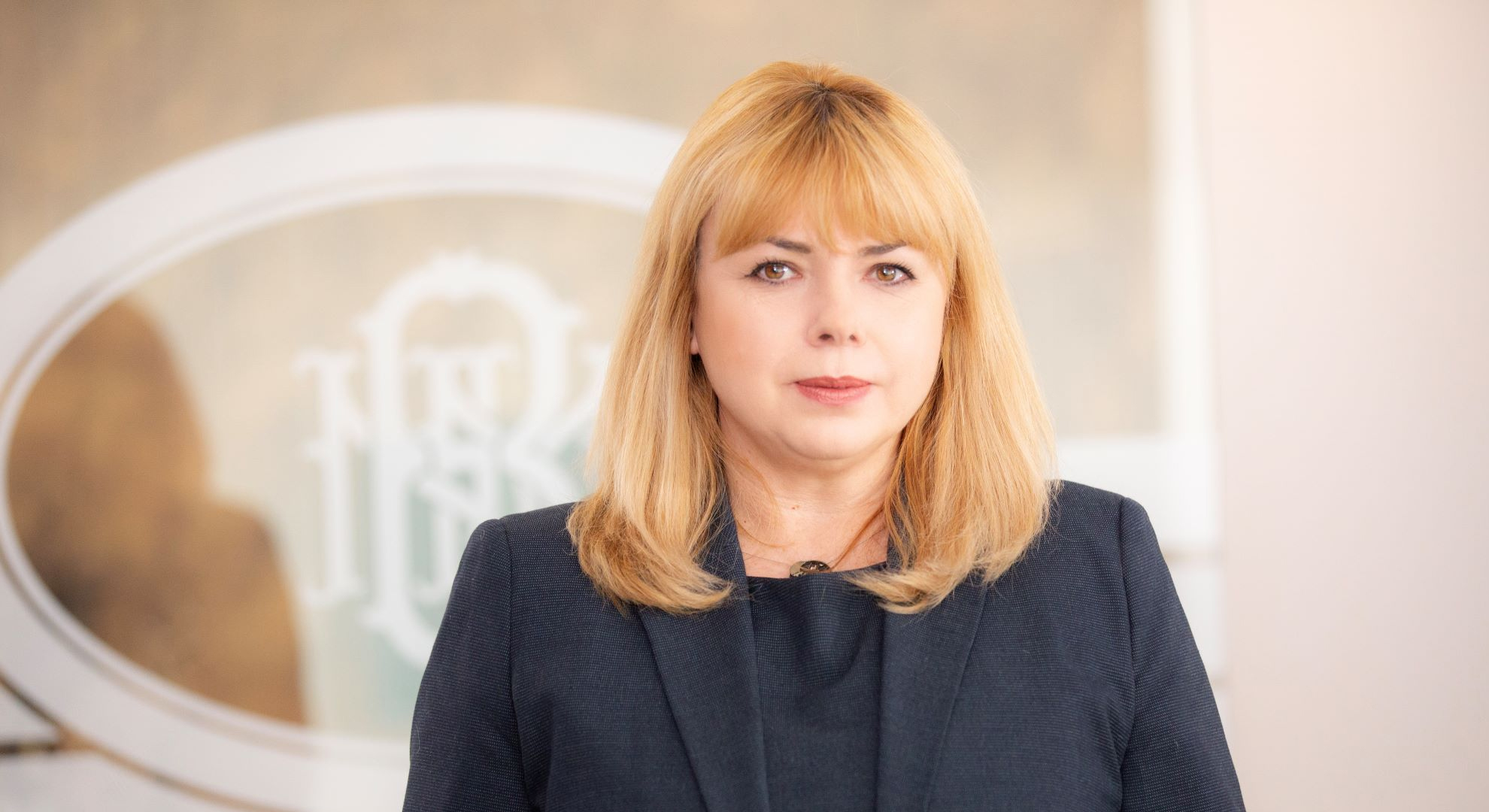
Artificial intelligence and digitalization can generate significant gains in competitiveness, productivity, and efficiency in the financial sector in the medium and long term, but these benefits also come with important risks, which is why the use of these tools must be done with moderation and responsibility, stated Anca Dragu, the governor of the National Bank of Moldova.
„We are talking today about this mega-trend that is also very much present in business, in the financial market. We're talking about everything digitization and artificial intelligence. These are areas that are present in the financial sector, in commercial banks, but also in central banks. I was reading a study by the IFC (International Finance Corporation, editor's note) on a number of central banks around the world and it shows that more than half of the central banks have real concerns in the area of introducing artificial intelligence into their day-to-day work, both their own and that of the regulated sectors. There are also very big risks associated with these new trends. We see, on the one hand, gains in competitiveness, gains in productivity and also studies show that in the medium to long term we will see significant gains of over 301TPTP3T in business efficiency, but these also come with risks. And then I would look from our role, the role of the regulator, to make sure that, on the one hand, digitization and AI, the two trends, are present and helping activity in financial markets in general, but also that they are used somewhat in a measured and responsible way” Anca Dragu said, according to Agerpres.
She emphasized that over 70% of the services offered to the entrepreneurial sector in the Republic of Moldova are digitized.
„Moldova is a country with a very good, very high level of digitalization. For those who go to the Republic of Moldova and need to obtain documents, you will see that this is very simple. In general, over 70% of the services that the administration offers to the entrepreneurial environment are accessed online, through the use of digital tools, which places the country at the top in terms of digitalization processes. So, we must keep pace. Bank customers are accustomed to digital services in public administration and would not be able to not find them in the banking sector as well. What does this mean? It means many risks that we must ask banks to manage. Be careful, managing these risks also means costs. Also, for us, as the Central Bank, it is important to look at the cost aspect, because we want the economy to be competitive.”, stated the governor of the National Bank of Moldova.
According to it, costs must be kept under control, including those related to cybersecurity.
„It is important for us as a central bank to look at the cost side because we want the economy to be competitive. That means that input, cost has to be kept under control as much as possible, including these cybersecurity costs in general. Then, a relatively small market means quite high costs per customer, especially compliance costs, and compliance activities related to preventing and combating money laundering are very expensive. And we are well aware that the smaller the number of customers, the higher the costs per customer, and the higher the cost of financing. Higher costs mean a less competitive economy. That is why our concern as a regulator is to ensure a good implementation of services in the area of IT, digitization and AI. Accountability and the lowest possible costs is a rather complicated equation, but by constantly analyzing and having a continuous dialogue with the market, you manage to calibrate the wisest measures”, added Anca Dragu.
In his opinion, a regulator must ensure that these trends exist in the banking market, but are applied responsibly.
„The National Bank of Moldova is responsible for regulation and supervision in several areas, not only in the banking and non-banking financial sector but also in insurance, which in Romania falls under the ASF (Financial Supervisory Authority, editor's note). For almost three years, this sector has been under the National Bank of Moldova, so we have an additional client. Then, we also look at what we are doing with our own resources. We ensure that we develop internal tools to help us with smoother and faster activity. AI helps us a lot in the AML (Anti-Money Laundering, editor's note) area, as well as in supervision. We know that all central banks have developed artificial intelligence-based tools for supervision. We already have recognized examples from the ECB and the FED. In the field of economic analysis, monetary policy decisions, and modeling, all of these have significant components related to artificial intelligence.”, also said the governor of the National Bank of Moldova.
According to this, there are also risks in using artificial intelligence.
„When we look at models, for example, there is a risk of falling into the trap of developing erroneous patterns. But, very importantly, when we discuss internally about assimilating AI tools, we look at the aspects of ethics and conduct.”Dragu specified.
In his opinion, humans must remain in control of AI, and the use of these tools in the financial sector must be done responsibly.
„Politica trebuie să fie aceea că omul rămâne în poziția de control, ‘in driving seat’. Am văzut că, nu de puține ori, apar erori. Mai citim tot felul de materiale din spațiul public generate de AI, efectiv copy-paste de acolo. Și nu doar conținutul este ciudat, ci și unghiul din care sunt abordate anumite probleme. Suntem în faza în care trebuie să introducem aceste instrumente și vedem tot felul de topuri cu țări care folosesc mai mult sau mai puțin inteligența artificială. Ne dorim să fim în top, dar asta presupune foarte multă atenție, înțelegerea riscurilor și gestionarea acestora. În general, trebuie să avem acest unghi al responsabilității, atât pentru sectorul pe care îl supraveghem, cât și pentru clientul final al acestui sector. Mai ales că vorbim despre domenii în care orice derapaj de la bunele practici este foarte costisitor. Iar în sectorul financiar am văzut, în toate țările – în România, în Republica Moldova, în Uniunea Europeană, peste tot – că încrederea se poate pierde foarte ușor, dar trebuie să lucrezi mulți ani, serios, pentru a o recâștiga și pentru a rămâne în zona de încredere.”


