

A „regulatory” blow applied with an axe - Regulation (EU) 2026/261 leads to the real risk that Romania will be left without gas during cold periods precisely when it needs it most, claims Dumitru Chisăliță, president of the Smart Energy Association (AEI).
Regulation (EU) 2026/261 (January 26, 2026) promises political virtue: „we're cutting off Russian gas.” It sounds good. The problem is that, in practice, it's a piece of regulatory engineering made for headlines and press conferences, but which could have the opposite effect in countries on the edge of the grid – including Romania: instability, volatility, market panic, and vulnerability during peak demand, claims the expert.
The harsh reality is that the EU has reduced Russia, but not „structurally” replaced it.”
Rusia nu mai livrează „40%+” din gazul UE ca în 2021, livrările au coborât la circa 11% din importurile UE de gaz prin conducte în 2025, iar dacă luăm în considerare și LNG, Rusia este la un nivel de cca 17% din importurile totale de gaze ale UE în 2025.
However, this doesn't mean Europe has become immune. It simply means the EU has „patched up” with LNG, reduced consumption, and more expensive imports, and the cost of security has been shifted to prices and supply risk, especially for states without direct access to LNG terminals and with limited interconnections.
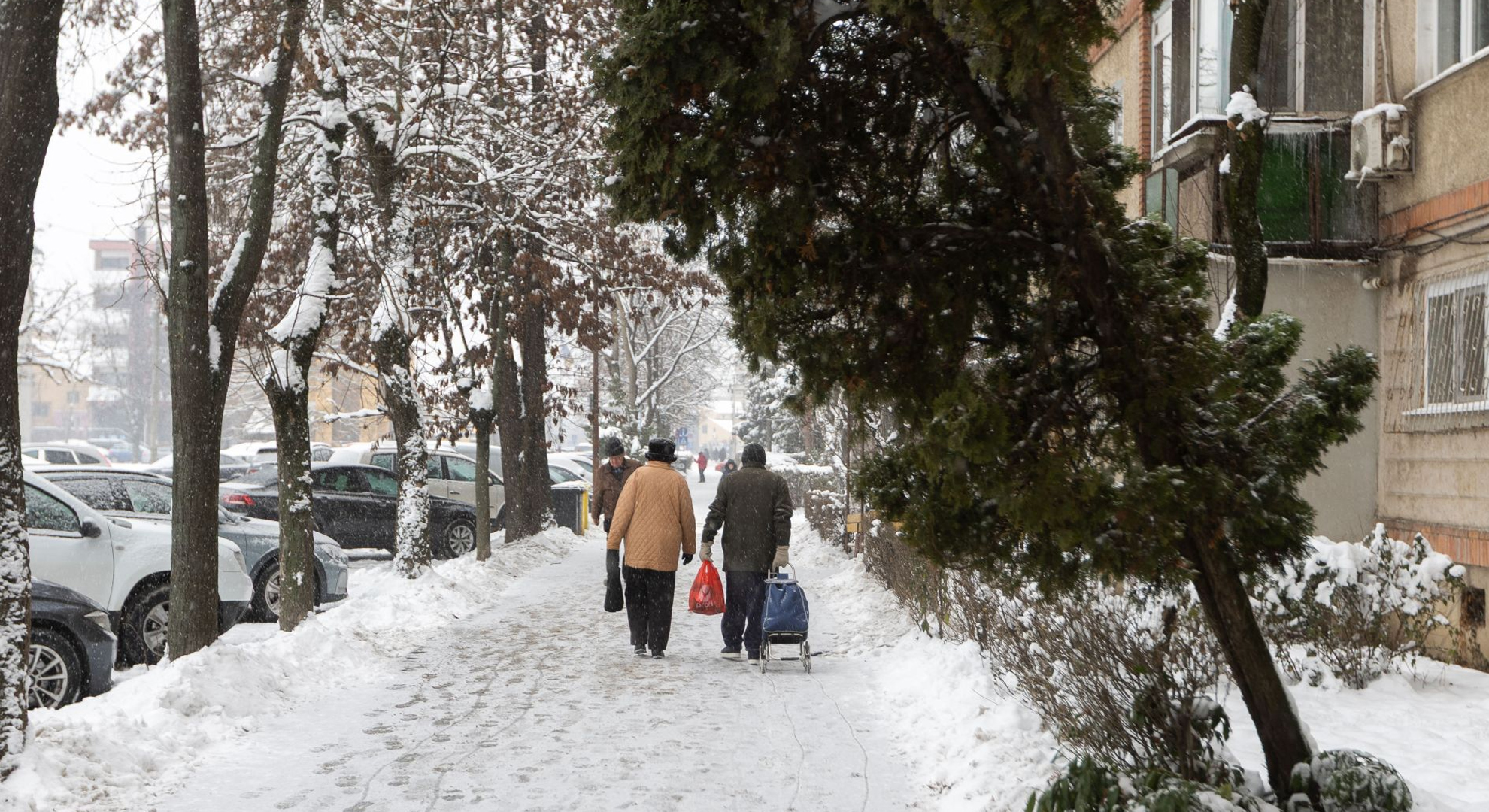
Romania fits exactly into this category; it can do relatively well during a mild winter, but during a harsh winter with peak consumption, it becomes dependent on regional flows.
Regulation 2026/261, in short, establishes rules for the operation of energy systems with a high penetration of renewable energy sources. It can be dangerous for the „network edge” because it shifts the responsibility for grid stability from traditional large power plants to distributed energy resources, which can be less predictable and harder to control. This can lead to imbalances and disruptions in the grid, especially at the periphery where resources may be more dispersed and less robustly connected.
The regulation introduces staggered bans and a „phased shutdown” logic for Russian imports, including through LNG and pipelines.
The Commission's implementation guidance explicitly states that no temporary exceptions are granted for imports of Russian LNG or gas based on contracts concluded or amended after June 17, 2025, and for these „new/adjusted” contracts, the prohibition applies from March 18, 2026.
This is the key, the regulation doesn't just hit Russia, it hits response time.
During peak consumption, gas security is played out in hours and days, not in „reporting streams,” „checks,” „contractual compliance,” and „legal frameworks.”.
In Romania, the risk is the peak consumption, not the annual average.
In Romania, the real discussion isn't „do we import a lot, all year round?”. It's: what do you do when your balance breaks in January, during a week of frost, and you need a quick top-up?
The regulation introduces three vulnerabilities for Romania:
- Fast import is becoming administratively/legally impossible. With Regulation 2026/261, you have a large „gray” risk zone: origins, contracts, intermediaries, checks – exactly the perfect ingredients for bottlenecks, delays, and commercial disputes.
- It depends on the region – and the region has its own games. When Romania needs to import „at the top,” the import comes through corridors and neighbors. And if the neighbors have an interest, they can create a „regional premium” and squeeze the Romanian market.
- The infrastructure is still under development. Transgaz has explicit projects to strengthen capacities and corridors („Vertical Corridor”), with timelines pushing real benefits to 2027–2028. This means that in the 2026–2027 window, you are still in a technical transition.
Hypocrisy of waivers and the risk of „washed Russian gas” being resold at a premium
The EU sells morality („stop Russia”), but in practice accepts exceptions and asymmetric transitions, which create:
- two-speed approaches;
- re-export/re-labeling incentive ;
- Speculative opportunities in the regional corridor.
The case of Slovakia and Hungary is already politically explosive. The Slovak and Hungarian governments have even announced legal action against the ban, calling it „energy suicide,” although they were given a timeline for the bans (including LNG by the end of 2026 and via pipelines by September 30, 2027, with a possible extension until November 1, 2027).
In this environment, the risk for Romania increases compared to the previously outlined scenarios, because:
- if „preferential” volumes appear in the region, they will go to countries where there is political/commercial leverage;
- and even if there is „disguised Russian gas” (through mixing, hubs, intermediaries), Romania may be left with high prices and the risk of non-delivery when it needs gas the most.
The market effect of high volatility and panic amounts to economic blackmail, even without Russia.
Even though Russia's share has decreased, the European market remains sensitive. According to the IEA, the EU's dependence on gas imports has increased, as has its vulnerability.
This translates in practice to a cynical mechanism:
- The ban on Russian gas and the rigidity of gas contracts bring a greater perceived risk in Europe.;
- Higher perceived risk = higher forward prices;
- Higher forward prices = higher industrial costs;
- Higher industrial costs = social and political pressure and consumption cuts („where possible”) (industry), so that social unrest doesn't explode.
This means: „decoupling” from Russia can, in the short term, produce a form of internal economic blackmail – through the price and scarcity of gas, not necessarily from Moscow.
In Romania, the provisions of the Regulation can turn a week of cold into an acute crisis
In a realistic scenario (prolonged frost, high consumption, tense regional flows), the following situation can occur:
- It is cold and rapid import is necessary for balancing.
- The regional market is expensive and limited in available volumes.
- Appears „volume” by region, but with risk of origin/contract.
- Suppliers are becoming cautious (they don't want to violate Regulation 2026/261).
- The decision moves to attorneys and procedures, not dispatch.
And then it doesn't matter how good the regulation sounds. Only one thing matters: continuity of delivery and payment at any price asked.
Regulation 2026/261 is a security policy that can produce insecurity.
Regulation (EU) 2026/261 is, by intention, a geopolitical weapon. In implementation, it risks being a boomerang:
- rigid instead of being „crisis-aware”;
- procedural instead of being „operational”;
- moralizer instead of being „infrastructural”.
For Romania, the danger isn't „Russia cuts off our gas” (that's already internalized). The danger is that the EU build a ban without a safety net in which to interconnect, access capacities, LNG, sufficient storage, emergency rules that actually work quickly).
What Romania Should Demand from the EU – Unreservedly
- Emergency operational clausesShort, clear, ex-ante procedures for peak balancing imports (not after you've entered a crisis).
- Regional anti-speculation mechanismtransparency on flows and penalties for manipulation (otherwise „solidarity” remains poetry).
- Infrastructure acceleration (vertical corridor, RO–BG, internal reinforcements) treated as a national security project, not an „investment project.”.
- Traceability rules that do not block the systemIf origin verification takes longer than a frost snap, you've built a bureaucratic bomb.
In Brussels, Regulation (EU) 2026/261 is presented as an act of European sovereignty: the gradual phasing out of natural gas imports from Russia, preparations for phasing out Russian oil, and strengthening the monitoring of energy dependencies. Politically, it sounds impeccable. But in the technical reality of energy systems, especially in Eastern Europe, this regulation risks becoming the exact opposite of its intention, an accelerator of vulnerability during peak consumption moments. Romania does not have an annual structural dependence problem. Its problem is the winter peak. And regulations do not heat radiators.