


Following yesterday's no-confidence vote in Parliament, Romania has entered a new period of political uncertainty that risks exacerbating economic problems. In a 2026 already marked by major economic challenges, the signals Bucharest is now sending to foreign markets are vital for keeping the economy afloat and saving the country's rating, according to an analysis by the consulting firm Frames.
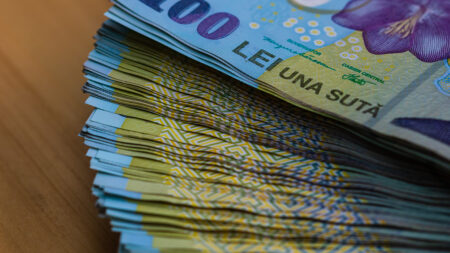
Nota de plată a acestei instabilități politice a început deja să fie tipărită. Piețele financiare reacționează întotdeauna primele, iar costurile se văd cu ochiul liber în viața de zi cu zi. Cursul de schimb leu/euro depășește record după record îndreptându-se vertiginos spre 5,3-5,5 lei/euro, punând presiune pe prețuri și pe buzunarele românilor. În același timp, dobânzile la care se împrumută statul s-au majorat rapid la cel mai ridicat nivel din UE.
„Market-driven corrections are ruthless and, unfortunately, will be extremely costly for all Romanians,” says Adrian Negrescu, manager at Frames.
The Danger of Junk, Closer Than Ever
What's more, clear warnings have already reached the Ministry of Finance from major international rating agencies. These institutions have sent unequivocal signals in recent days, indicating that Romania's political situation is being strictly monitored in real time.
Any misstep or hesitation in the immediate aftermath could trigger a drastic decision with direct effects on an already vulnerable economy.
According to the Frames analysis, avoiding a sovereign rating downgrade to Junk status (country not recommended for investment), which would further increase the cost of borrowing for individuals and companies, depends solely on the politicians' ability to demonstrate coherence. In other words, predictability and stability are now the only arguments that can calm investors.
„I hope Mr. Bolojan, as interim prime minister, and Alexandru Nazare, the Minister of Finance, will ensure the timely continuation of payments and fulfill their public commitments without exception. This is happening at a time when financial discipline is no longer just a theoretical recommendation, but a rule for survival. Only in this way can the state's ability to finance itself on international markets be protected,” Negrescu stated.
A turning point
For Romania, 2026 represents a turning point. We have three huge strategic objectives on the table, which depend directly on the stability of these days.
The first is the full implementation of the commitments in the National Recovery and Resilience Plan (PNRR), a vital program that provides us with 10 billion euros by August.
„So far, we've only managed to attract a tiny fraction of the money made available by Brussels. If we fail to meet our reform commitments, the PNRR will go down in Romania's history as the National Plan of Failed Reforms.”, says Negrescu.
The second objective aims to attract and effectively utilize European funds from the new SAFE instrument, 16 billion euros absolutely necessary for equipping the army, increasing national security, and expanding highways in the Moldova region.
„SAFE is not a conspiracy; it is a lifeline for Romania from a national security perspective. We have the opportunity to revive our defense industry and continue building highways—and all at an unexpectedly low cost. The 16.68 billion euros are being offered at an interest rate of just 3.1% compared to the 7.1% the government normally borrows at, and with a 10-year grace period. Essentially, we’re modernizing our military and infrastructure with a loan that we’ll pay off over the next 45 years.”shows the Frames analysis.
Last but not least, Romania must rapidly advance in the historic process of joining the Organisation for Economic Co-operation and Development (OECD). The latter is a vital project for Romania's image in the eyes of investors. If we miss it, it will be difficult to convince anyone to finance us.
According to the Frames analysis, these mega-projects risk getting bogged down if a government capable of putting them into practice is not quickly established at Victoria Palace.
„If we don't quickly have a government capable of implementing these reforms, unfortunately, we will head towards a severe recession, because the markets will not hesitate to punish Romania for this political deviation. Investors are not interested in the electoral struggle, who performs best on television; they make dry, concrete calculations based on predictable data, not slogans and promises of a better future.” , Negrescu also said.
„I hope that Mr. President Nicușor Dan will not accept any governmental formula that does not include these major projects as priorities, with deadlines and commitments. Without a governance program with a concrete timeline, it is unlikely that this national plan will become a reality,” the Frames manager also said.
What does post-Bolojan Romania look like economically?
After years of the state spending far more than it produced, the first months of 2026 bring a major surprise on the public finance front. The budget deficit has been halved.
More precisely, the budget deficit fell to 21 billion lei in the first quarter of this year. To understand the scale of the correction, it should be noted that in the same period last year, the state had a deficit of no less than 43.6 billion lei.
As a percentage of Gross Domestic Product, the fiscal consolidation effort is even more evident. We have gone from an alarming deficit of 2.281% of GDP in March 2025 to just 1.031% of GDP in March 2026. How did we get here?
On the one hand, the government has managed to raise more money. Total revenue increased by 12.31%, a performance driven largely by VAT and payroll tax collections.
According to the Frames analysis, this is the result of ANAF's digitalization campaigns, such as the e-Factura and e-Transport systems, which have begun to limit tax evasion and bring the gray economy to light.
The state has put the brakes on spending
Unusually for the Romanian government, total spending fell by 2.81% in nominal terms. What really stands out is a first in recent years.
„We are observing a real correction in budgeted personnel expenses and a capping of the rate at which rigid state expenses are growing, a signal that the administrative apparatus is trying to slim down,” the Frames analysis shows.
Along with fiscal discipline, positive signs are also coming from abroad. Foreign capital is making a strong comeback in Romania. After two consecutive years of decline, foreign direct investment (FDI) surged by 451% in 2025, reaching a solid threshold of 8.1 billion euros.
The good news is that this trend remains strong this year as well. In the first two months of 2026, foreign investment increased by approximately 40%. This trend demonstrates a clear resurgence of confidence among major international companies in Bucharest’s ability to stabilize the macroeconomic environment.
In addition, external imbalances—which have long been a headache for the National Bank—are easing. The current account deficit continues to grow, but the pace has slowed sharply. We have gone from a massive increase of 34.41% in 2024 to just 3.41% in 2025. At the same time, the goods trade deficit has begun a slight correction, falling by 1.4%. In essence, imports are no longer stifling Romanian exports as aggressively, which is the direct result of a more prudent fiscal policy that has curbed import-driven consumption.
A paradigm shift is also evident on major infrastructure construction sites. At first glance, the total value of public investments in the first quarter of 2026 fell by 13.51% compared to last year. However, the main reason is the halving of investments funded directly from domestic sources. It should be noted that 2025 was a completely atypical fiscal year, marked by massive payments to clear the arrears accumulated by local governments through the „Anghel Saligny” program.
In contrast, projects funded by Brussels are picking up pace. Investments supported by traditional European funds and the National Recovery and Resilience Plan (PNRR) increased by 12.71%, reaching 16.23 billion lei.
„This reorientation indicates a clear government strategy. Construction sites remain open, primarily using non-reimbursable funds or cheap European loans, thus taking enormous pressure off the state budget. This is good news, but it also hides a major danger. If these European funds stop coming because we are unable to implement reforms, most investments will be halted, and the risk of a major economic recession will become very real.”, the Frames analysis further shows.