

Romania has reached a paradoxical situation in the energy sector: although there is huge interest in investing in energy production, real access to the grid is increasingly difficult for serious projects. The reason – a very large volume of technical connection approvals (ATR) that are not turning into investments.
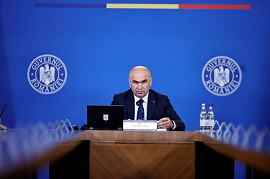
Prime Minister Ilie Bolojan stated that approximately 90%% of these opinions are, in reality, speculative.
„To deliver energy, you need access to grids. However, at the moment, this access is blocked or made more expensive by ATRs that do not materialize into projects,” said the head of the Executive.
The data shows the scale of the problem: the Romanian economy needs approximately 9,000 MW daily, yet permits for almost 80,000 MW have been issued - almost ten times more. In practice, only around 8,000 MW have made real progress towards implementation.
In other words, the vast majority of projects only exist on paper.
According to the prime minister, some of those who obtained these permits do not intend to actually build the plants, but aim to capitalize on these projects by selling them. At the same time, occupied grid capacity is blocking investors who actually have financing and are ready to start work.
In the absence of alternatives, they end up either buying projects that are already „connected on paper” or bearing additional costs for network reinforcement, which significantly increases investment budgets.
The situation also has side effects. Approximately 10,000 hectares of land have been removed from agricultural use for such projects, which in many cases have not been developed.
How did we get here? According to Bolojan, the regulatory framework was too permissive for years. Financial guarantees were reduced, and deadlines were extended or not strict enough. Even the changes introduced in 2024 were not sufficient to correct the problem.
„Without firm rules, these speculative behaviors were allowed,” said the prime minister.
The government now wants to radically change the rules of the game. Among the measures being discussed are a significant increase in guarantees, the introduction of clear deadlines for project development, and the forfeiture of guarantees if they are not met.
The Prime Minister believes that the current level of guarantees, even after recent proposals, is too low and must be increased to discourage projects without a real foundation.
Authorities are also considering models from other countries, such as Spain, where similar measures have led to the elimination of speculative projects and the acceleration of real investments.
The objective is that, in the coming period, the network will be „cleaned” of notifications that have no real chance of implementation, so that the available capacity can be used by serious investors.
„We need to unblock the networks and allow real projects to develop,” Bolojan pointed out.
In a context where Romania is trying to accelerate its energy transition and attract investments in renewable energy, this reform could make the difference between blocked projects and projects actually put into operation.