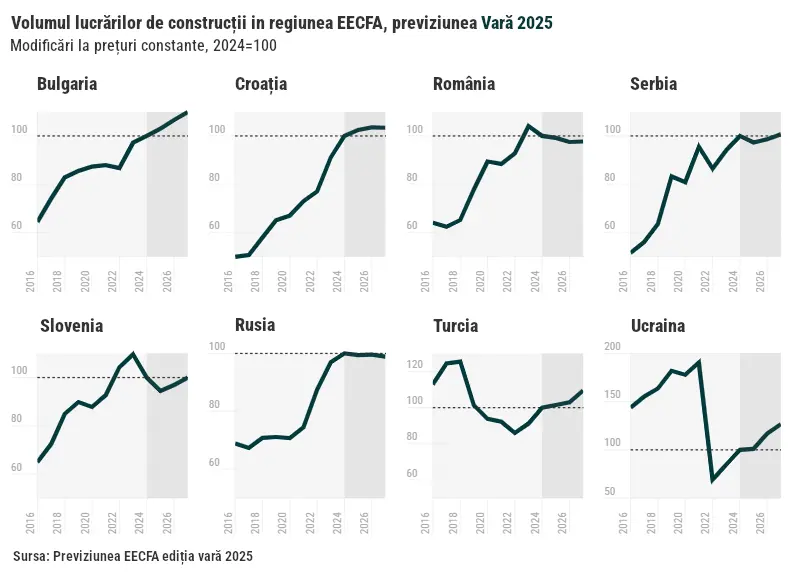
According to the EECFA report for winter 2025, construction markets in Eastern Europe have been relatively stable despite economic challenges and global uncertainties. In Romania, the economy is going through a difficult period, with high inflation and falling private consumption, which is affecting activity in the construction sector, especially for civil engineering projects. However, major public investments initiated as early as 2023 and the absorption of European funds are supporting demand and the local market remains resilient, writes Construction Agenda.
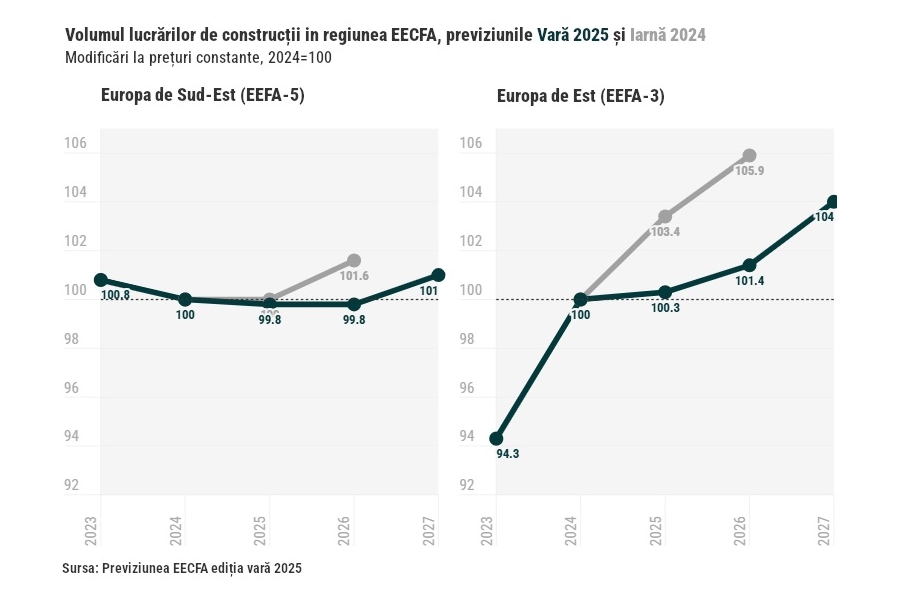
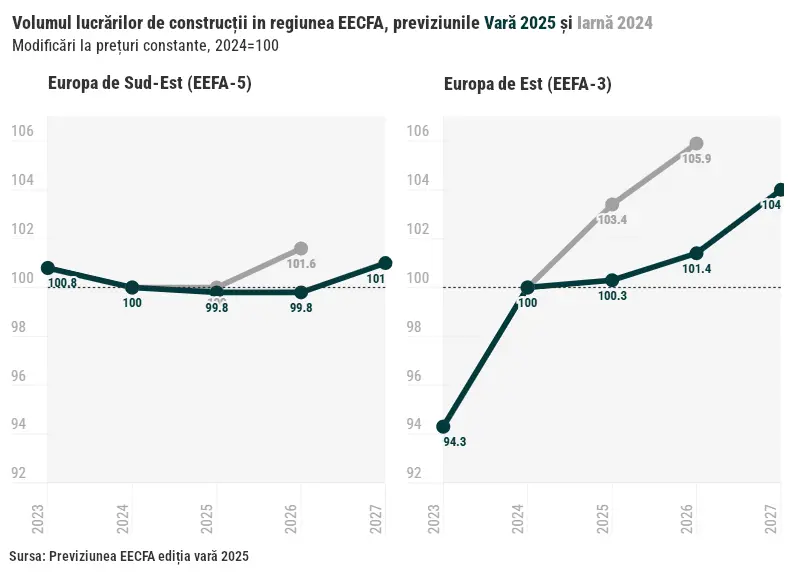
Overall, EECFA forecasts moderate growth in construction output in Bulgaria (+3% in 2026-2027) and stable residential and civil activity in Croatia, Serbia and Slovenia. In Romania, most non-residential and infrastructure projects depend on the government's ability to manage the budget deficit and the absorption of European funds, which may moderate the pace of expansion.
EECFA data also highlights a growing demand for construction machinery and equipment, with increases in the earthmoving and road machinery segment in Italy (+3% vs. 2024). In Eastern Europe, investments in infrastructure renovation and renewable energy projects continue to boost the sector, while residential and commercial projects benefit from rising prices per square meter. At the national level, construction firms and equipment suppliers are eyeing the opportunities generated by the PNRR and SEZ (special economic zone) programs, even as budget cuts and tax hikes affect purchasing power. The sector remains competitive thanks to the involvement of local and international companies, while investment in sustainability and new technologies is a key factor in maintaining performance.