

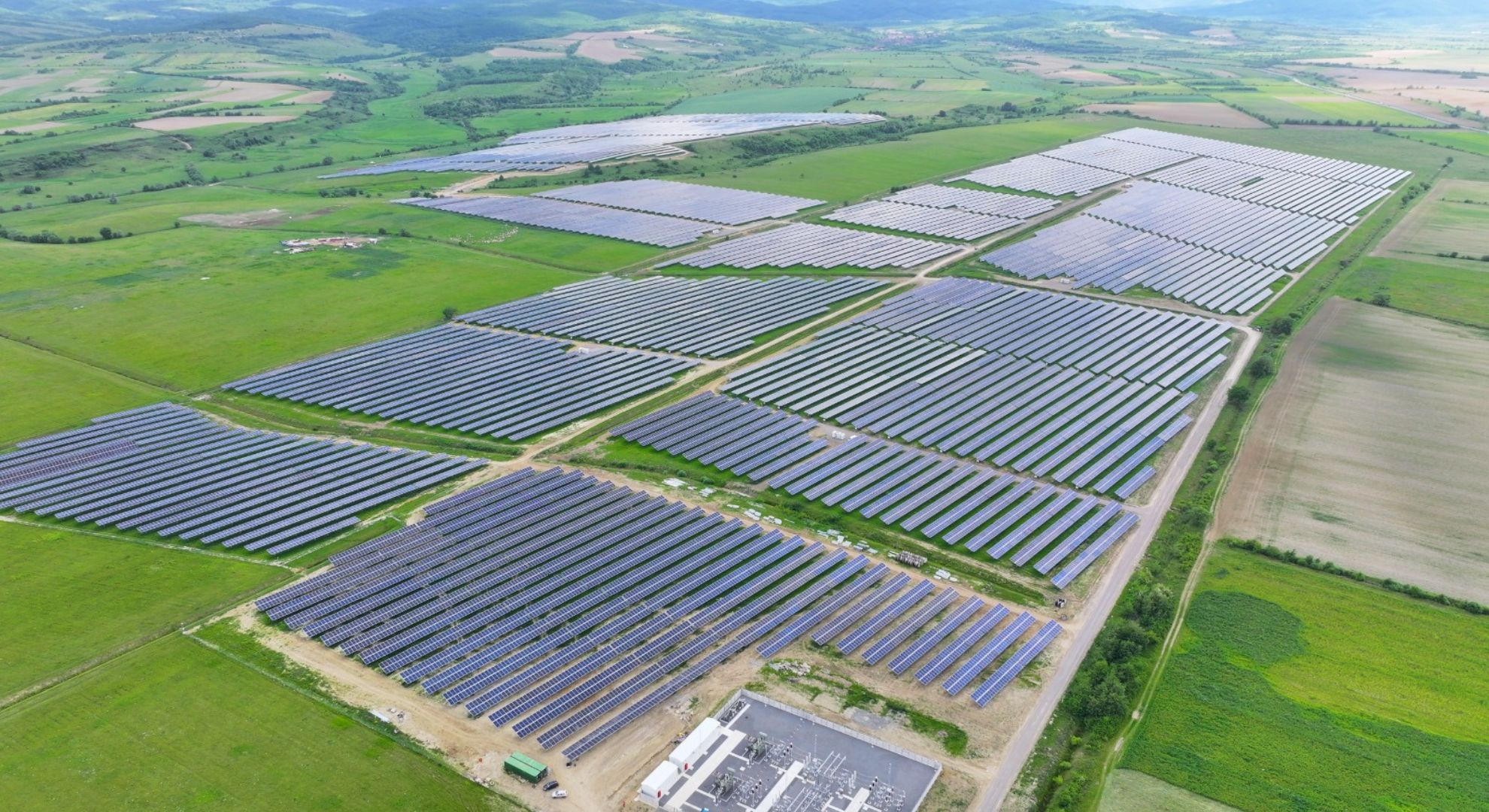
Econergy is one of the major investors in renewable energy in Romania, with a local portfolio of projects under development of approximately 3.3 GW. The company is developing the Părău 1 and Rătești projects, the latter being one of the largest solar projects connected so far in Romania, for which a Real-Time Market PPA (RTM) contract has been signed. In an interview with IndustryNews, Enrique Battistini, Head of PPA & Energy Management at Econergy, emphasizes that Romania plays a central role in the company's European platform, where renewable energy production, storage solutions, and long-term commercial structures, such as PPAs and CfDs, are integrated, contributing to the local energy transition.

How do you see Econergy's positioning in the Romanian renewable energy market, and what role does Romania play in the company's broader regional strategy?
Romania is one of Econergy's core strategic markets in Europe and an essential pillar of our regional growth strategy. In recent years, we have built a solid operational platform in the country, with several utility-scale solar projects already connected to the grid and a significant portfolio in development.
Currently, Econergy has over 500 MW of operational or ready-to-connect solar capacity, as part of an advanced portfolio of approximately 1.5 GW (connected, ready-to-connect, under construction, and pre-construction). In total, our Romanian portfolio reaches approximately 3.3 GW, positioning Econergy as an important platform supporting Romania's energy transition.
An important component of our strategy is the integration of battery energy storage systems (BESS) with solar generation. As the share of renewables increases, storage allows us to reduce price and profile risks, optimize energy delivery, capitalize on market volatility, and enhance the flexibility of our assets. From an investment perspective, this hybrid approach supports a more robust project economics.
At a broader level, Romania plays a central role in Econergy's European platform, where we combine renewable energy production, storage, and long-term commercial structures, such as PPAs and CfDs, to support the country's energy transition.
Econergy recently secured a contract under Romania's CfD scheme. How does this achievement influence its development plans and investment outlook in the local market?
Obtaining capacity within Romania's CfD mechanism represents a significant milestone for us and a clear confirmation of our long-term commitment to the market. In the most recent auction, Econergy secured the largest share of capacity (125 MW), which reinforces the strength of our platform in Romania. The CfD scheme offers long-term revenue visibility and supports the financing of large-scale renewable projects, an essential aspect for accelerating their implementation.
For Econergy, this achievement strengthens the investment outlook in Romania and confidence in the long-term fundamentals of the market. It allows us to proceed with important projects such as Părău 2, while maintaining a balanced commercial strategy that combines regulated mechanisms, such as CfDs, with exposure to the free market and long-term PPAs.
From a broader perspective, the CfD program contributes to creating a more stable investment environment, essential for attracting international capital and expanding renewable energy in Romania.
The Părău 1 and Rătești projects (one of the largest solar projects connected to date in Romania), for which Econergy signed an RTM PPA, are some of the key projects in your portfolio. What is their current status and what impact do you estimate they will have on the local market?
Both projects are reference assets in Econergy's portfolio in Romania. This agreement represents an important step in our hedging strategy and illustrates how Econergy can act as a market maker in the country, where PPAs and short-term hedging structures can supplement merchant revenues.
The transaction also demonstrates the increasing maturity of commercial structures in the region. Currently, these assets are operational and contribute renewable energy to Romania's grid. We believe that projects like Părău 1 and Rătești strengthen confidence in energy contracting, both short-term and long-term, and set a benchmark for future transactions in Romania.
How do you see the evolution of the PPA market in Romania and what types of companies are showing the most interest in long-term corporate PPAs?
The PPA market in Romania is still developing, but it has seen significant progress in recent years. As the regulatory framework becomes clearer and more renewable capacity comes online, we expect the role of PPAs to grow steadily in the long term. In this context, Romania's accession to the Association of Issuing Bodies (AIB) will enable the cross-border transfer of Guarantees of Origin (GOs) at the European level, which will significantly boost the PPA market.
Interest is particularly strong from energy-intensive industries such as industrial manufacturing, technology, and data centers, as well as from multinational corporations with ambitious decarbonization goals.
These organizations are increasingly seeking long-term renewable energy sources to manage their costs and meet their sustainability commitments. At the same time, we are seeing growing involvement from energy traders and utilities interested in flexible power purchase structures.
Econergy has experience with international PPAs, such as the agreement signed with Apple in Poland. What lessons from these projects can support the development of similar agreements in Romania?
One of the key lessons from international PPA transactions is the importance of creating balanced and bankable contractual structures that work for both developers and corporate off-takers. Long-term renewable energy procurement requires careful alignment between the commercial, financial, and operational aspects of a project.
The agreement with Apple in Poland has demonstrated that large multinational companies are increasingly willing to enter into long-term renewable energy contracts when projects are solid, well-financed, and backed by experienced developers.
For Romania, the main opportunity is to build on these examples and create standardized contractual frameworks that facilitate such agreements. As the market matures and more benchmark transactions emerge, we expect corporate PPAs to become a key component of the renewable energy ecosystem.
What opportunities do you see for expanding Econergy's portfolio in Romania in the coming years, both in terms of new projects and partnerships with industrial consumers through PPAs?
Romania continues to offer significant growth opportunities for renewable energy development. The country has solid solar resources, growing demand for electricity, and a clear need to replace conventional generation capacity.
For Econergy, the expansion will come from a combination of new utility-scale solar projects, hybrid assets integrating battery storage, and stronger commercial partnerships with corporate off-takers.
We see great potential in combining renewable generation with storage to deliver more flexible energy solutions that support both grid stability and long-term PPA structures. This approach allows us to better meet the evolving needs of industrial consumers and energy markets.
From the perspective of an international renewable energy developer, what factors are necessary for the Romanian market to become more attractive for investments and for the development of corporate PPAs?
Romania already has many of the foundations needed to attract significant investment in renewable energy, including solid solar resources, growing demand, and increasing interest from companies in clean energy. To accelerate market development, regulatory stability and long-term visibility for investors are essential.
Clear frameworks for corporate PPAs, efficient authorization processes, and the expansion of grid infrastructure will also play an important role. As the market evolves, the integration of battery energy storage systems will become increasingly important for system flexibility and the development of more sophisticated commercial structures.
With the right regulatory framework and market signals, Romania has the potential to become one of the leading markets for renewable energy and corporate PPAs in the region.