





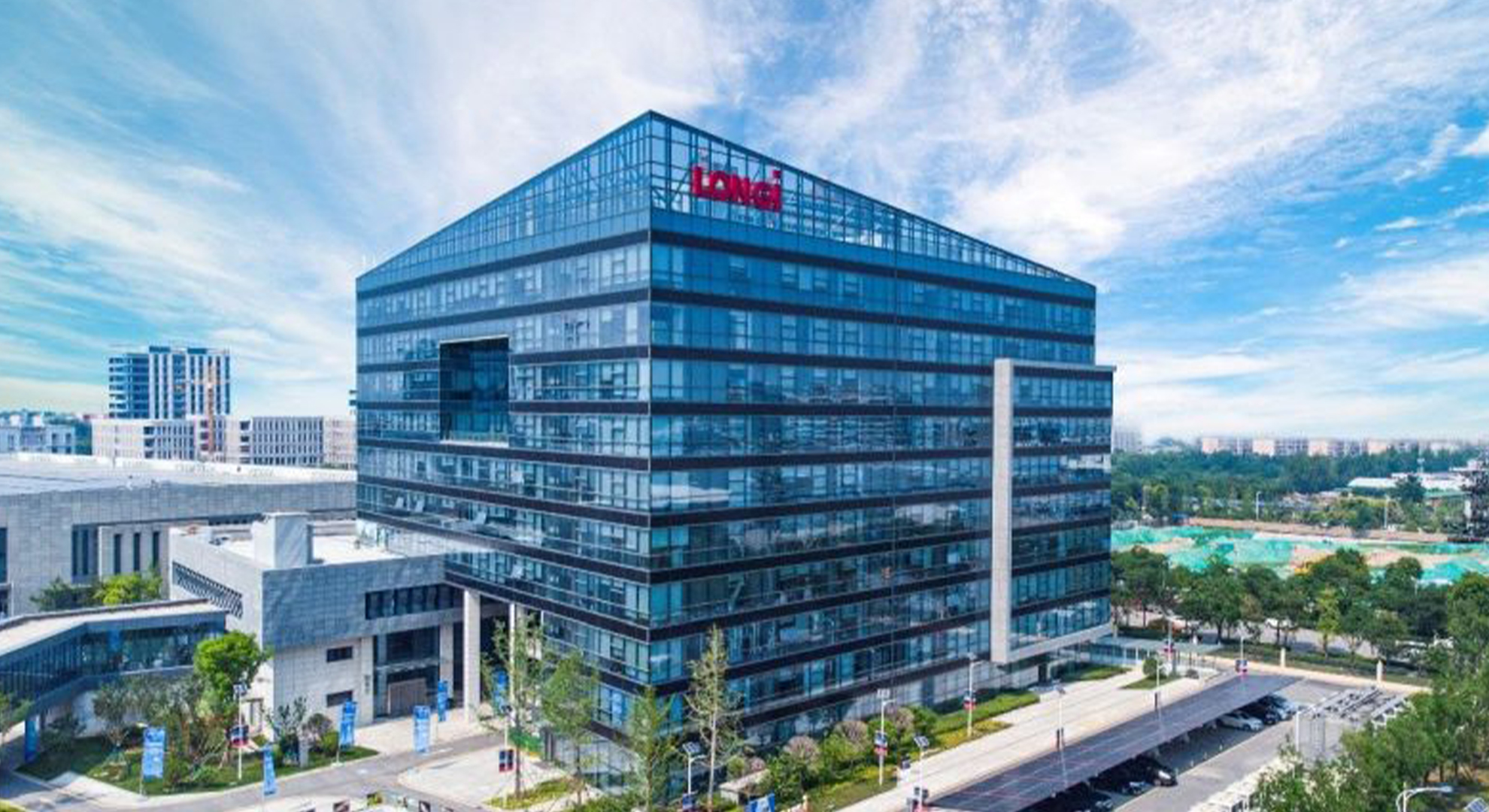
LONGi is consolidating its operations in the Romanian market, aiming to reach an installed capacity of over 15 GW by 2031 and strategically repositioning itself from a simple provider of photovoltaic modules to an integrator of complete energy solutions, including storage and green hydrogen. In parallel, the company is strengthening its technological leadership by transitioning from PERC (Passivated Emitter and Rear Cell la tehnologia Back Contact(BC), cu obiectivul de a depăși limitele actuale de eficiență și de a pregăti terenul pentru celulele tandem ce pot depăși 30% eficiență. Totodată, LONGi își mută focusul de la costul per modul la costul total al energiei, mizând pe producție inteligentă și pe integrarea soluțiilor solar și stocare pentru a maximiza performanța proiectelor.
The information was exclusively provided to IndustryNews.ro by Guanyu Lin, Delivery Manager, Strategic Accounts SEE – Romania, Utility Business Group – LONGi, who will be a speaker at Solar Energy Bucharest Summit April 22, 2026
LONGi is recognized globally for its leadership in monocrystalline technology. How do you see this technology evolving in the context of emerging innovations like HPBC or tandem cells?
At LONGi, our perspective on technological evolution is built on a history where we have been the industry's primary „disruptor.” To understand our direction for HPBC (Hybrid Passivated Back Contact) and tandem cells, we must look at the path we have paved.
At a time when the industry was dominated by multicrystalline silicon, as it was cheaper and easier to produce, LONGi took a clear stance, contrary to the general trend. We were the first to focus exclusively on monocrystalline technology, betting on its superior efficiency potential, even when it wasn't the dominant choice. By continuously reducing the costs of this technology, we didn't just participate in the market; we fundamentally changed it, until monocrystalline became the global standard.
However, we recognize that standard PERC technology is approaching its physical efficiency limit. This reality has led us to the next strategic shift: transitioning to Back Contact technology. Just as we championed monocrystalline when others hesitated, we are now committed to promoting HPBC as the new next-generation standard. By moving all metallic electrodes to the back of the cell, we have eliminated front-side shading and optimized photon absorption.
This is not just a gradual improvement, but a structural redesign, offering a significant leap in conversion efficiency and better performance in high temperature and low light conditions, frequently encountered in Romania and Europe.
Looking further, we see technological evolution leading to tandem cells. We consider the BC structure not as a final destination, but as the ideal „base cell” platform for integrating secondary materials, such as perovskite. By stacking these materials, we can capture a broader spectrum of sunlight, pushing efficiency beyond 30%and, in time, towards 35%.
LONGi's path has always been defined by this long-term vision: identifying superior technology early, scaling it to make it accessible, and using that success as the foundation for the next leap. From the first monocrystalline wafer to the current HPBC era and the tandem future, our evolution is defined by transforming the industry's „ceiling” into its new „starting point.”.
The company has consistently invested in improving efficiency and reducing the cost per watt. What are the key innovation directions in the coming years?
Our investment strategy has shifted from simply reducing the cost of a module to lowering the total cost of energy over a project's entire lifespan. In a market like Romania, where grid connection points are increasingly limited and land permitting processes are complex, maximizing output per square meter becomes essential.
We are focusing innovation on the mass production of Back Contact technology to surpass the 25% efficiency threshold, in parallel with materials science development. This not only shields the supply chain from global price volatility but also ensures adherence to the highest ESG standards. By integrating AI-based digital monitoring at the module level, we ensure that high efficiency becomes not just a lab indicator, but an operational 30-year reality for our partners.
To understand our innovation directions, we need to look at the LONGi Lighthouse Factory, the world's first photovoltaic facility to achieve this global milestone for intelligent manufacturing. By integrating AI, digital twins, and the industrial internet, we have implemented over 30 digital use cases that have transformed solar production into a data-driven ecosystem.
This unit introduced AI-based real-time traceability and automation through machine vision, enabling a single line to produce over 27 types of modules, with 90% faster root cause analysis. The results are measurable: a 43% improvement in product reliability, a 35% increase in output, and an 84% reduction in lead times.
In addition, in 2024, the factory became the world's first „Lighthouse + Zero-Carbon” certified facility according to ISO 14068. This combination of smart and green manufacturing allows us to reduce the cost per watt while maximizing quality and sustainability.
Ultimately, this technological infrastructure allows LONGi to deliver high-performance Back Contact technology with unprecedented precision and carbon footprint efficiency.
LONGi has become increasingly active in Central and Eastern Europe. How do you assess the potential of the Romanian market and the region?
Romania is currently one of the most dynamic and strategic markets in the European Union. We are observing a clear transition from an emerging market status to a regional solar hub for Central and Eastern Europe.
This growth is supported by government commitments in the National Energy and Climate Plan and the success of CfD mechanisms. The entire region is rapidly phasing out coal, and Romania's geographical diversity, from high irradiation in the south to industrial areas in the west, offers an ideal context for solar project development.
With an installed capacity estimated to exceed 15 GW by 2031, LONGi is fully committed to becoming the main technological partner on Romania's path to energy independence.
How is LONGi adapting its strategy in the context of increased demand for utility-scale projects compared to the commercial and industrial segments?
To address the accelerated energy transition, we have structured our strategic portfolio to cover the distinct requirements of each segment.
For utility-scale projects, we offer modules with high bifaciality, such as the Hi-MO 9, designed for ground-mounted installations where durability and reduced BOS costs are essential.
For the commercial and industrial segment, we are focusing on the Hi-MO X10 series, also based on Back Contact technology, which offers an elegant design and high performance. Companies in Romania are increasingly attentive to both profitability and architectural integration, and these modules meet both requirements, including superior performance in low-light conditions.
At the same time, our approach is no longer limited to selling components, but aims to provide integrated solutions. Through the LONGi ONE strategy, we are moving from a multi-vendor architecture to a unified „Solar Generator” system, which integrates Back Contact technology with 5S storage solutions.
For the utility segment, we offer OneBank 2.0, an integrated AC/DC solution that reduces system-level failure rates by 60%%. For the commercial and industrial segment, the EnergyOne platform, combined with Hi-MO X10 modules, achieves efficiency of up to 90.3%%, with response times in the milliseconds.
The „One System, One Platform, One Responsibility” model allows companies in Romania to avoid the complexity of fragmented systems and benefit from a single point of responsibility, as well as protection against energy price volatility.


What role do local partnerships play in LONGi's strategy in Europe, and how do you collaborate with developers and EPC contractors in Romania?
Local partnerships are the essence of our operations in Europe, as we believe that global technology must be combined with local expertise to be truly effective.
In Romania, we don't just act as a supplier; we work directly in the field to provide engineering support to EPC contractors, helping them optimize plant design for maximum output.
We prioritize knowledge transfer through technical workshops to ensure local partners are familiar with the latest high-efficiency technologies.
Our involvement in landmark projects across the country, such as the recent 300 MW agreement for a portfolio of ground-mounted power plants, demonstrates this synergy. LONGi provides the technological foundation, and Romanian partners offer the operational and regulatory expertise necessary for the implementation of these complex projects.
What role do technologies like energy storage and green hydrogen play in complementing LONGi's photovoltaic solutions?
In LONGi's vision, the energy transition goes beyond simple energy production and evolves into a complex and resilient ecosystem, which we call the „Triangle of Stability.”.
This includes three interconnected pillars. Generation represents the system's engine, with high-efficiency photovoltaic modules remaining the primary energy source. By utilizing cutting-edge Back Contact technologies, we ensure maximum yield per square meter.
Storage is the stabilizer of the system. Because solar energy is intermittent, solutions like OneBank 2.0 and EnergyOne act as a buffer, stabilizing production and allowing for efficient energy use.
Hydrogen acts as a regulator. For hard-to-decarbonize sectors, it complements the system, transforming surplus solar energy into clean fuel through alkaline electrolyzers and offering an emissions-free solution for industry and transport.
This strategic framework reflects LONGi's evolution from a module manufacturer to a provider of complete zero-carbon energy infrastructure.
About LONGi
Under the mission „making the best of solar energy to build a green world”, LONGi focuses on technological innovation and has developed several business lines, covering the entire value chain: monocrystalline silicon wafers, photovoltaic cells and modules, distributed solar solutions for the commercial and industrial segment, solutions for utility-scale projects, integrated solar + storage systems, building-integrated photovoltaic solutions, and equipment for hydrogen production.
As an international company, LONGi is present in over 160 countries and regions. By actively implementing the „Solar for Solar” concept, LONGi is accelerating the global transition to sustainable energy and promoting energy equity, facilitating access to clean and affordable energy for an ever-increasing number of people worldwide. The recent 300 MW order for a portfolio of ground-mounted power plants demonstrates this synergy. LONGi provides the technological foundation, while Romanian partners offer the operational and regulatory expertise necessary for the implementation of these complex projects.
What role do technologies like energy storage and green hydrogen play in complementing LONGi's photovoltaic solutions?
In LONGi's vision, the energy transition goes beyond simple energy production and evolves into a complex and resilient ecosystem, which we call the „Triangle of Stability.”.
This includes three interconnected pillars. Generation represents the system's engine, with high-efficiency photovoltaic modules remaining the primary energy source. By utilizing cutting-edge Back Contact technologies, we ensure maximum yield per square meter.
Storage is the stabilizer of the system. Because solar energy is intermittent, solutions like OneBank 2.0 and EnergyOne act as a buffer, stabilizing production and allowing for efficient energy use.
Hydrogen acts as a regulator. For hard-to-decarbonize sectors, it complements the system, transforming surplus solar energy into clean fuel through alkaline electrolyzers and offering an emissions-free solution for industry and transport.
This strategic framework reflects LONGi's evolution from a module manufacturer to a provider of complete zero-carbon energy infrastructure.
About LONGi
Under the mission „making the best of solar energy to build a green world”, LONGi focuses on technological innovation and has developed several business lines, covering the entire value chain: monocrystalline silicon wafers, photovoltaic cells and modules, distributed solar solutions for the commercial and industrial segment, solutions for utility-scale projects, integrated solar + storage systems, building-integrated photovoltaic solutions, and equipment for hydrogen production.
As an international company, LONGi is present in over 160 countries and regions. By actively implementing the „Solar for Solar” concept, LONGi is accelerating the global transition to sustainable energy and promoting energy equity, facilitating access to clean and affordable energy for an increasing number of people worldwide.


