





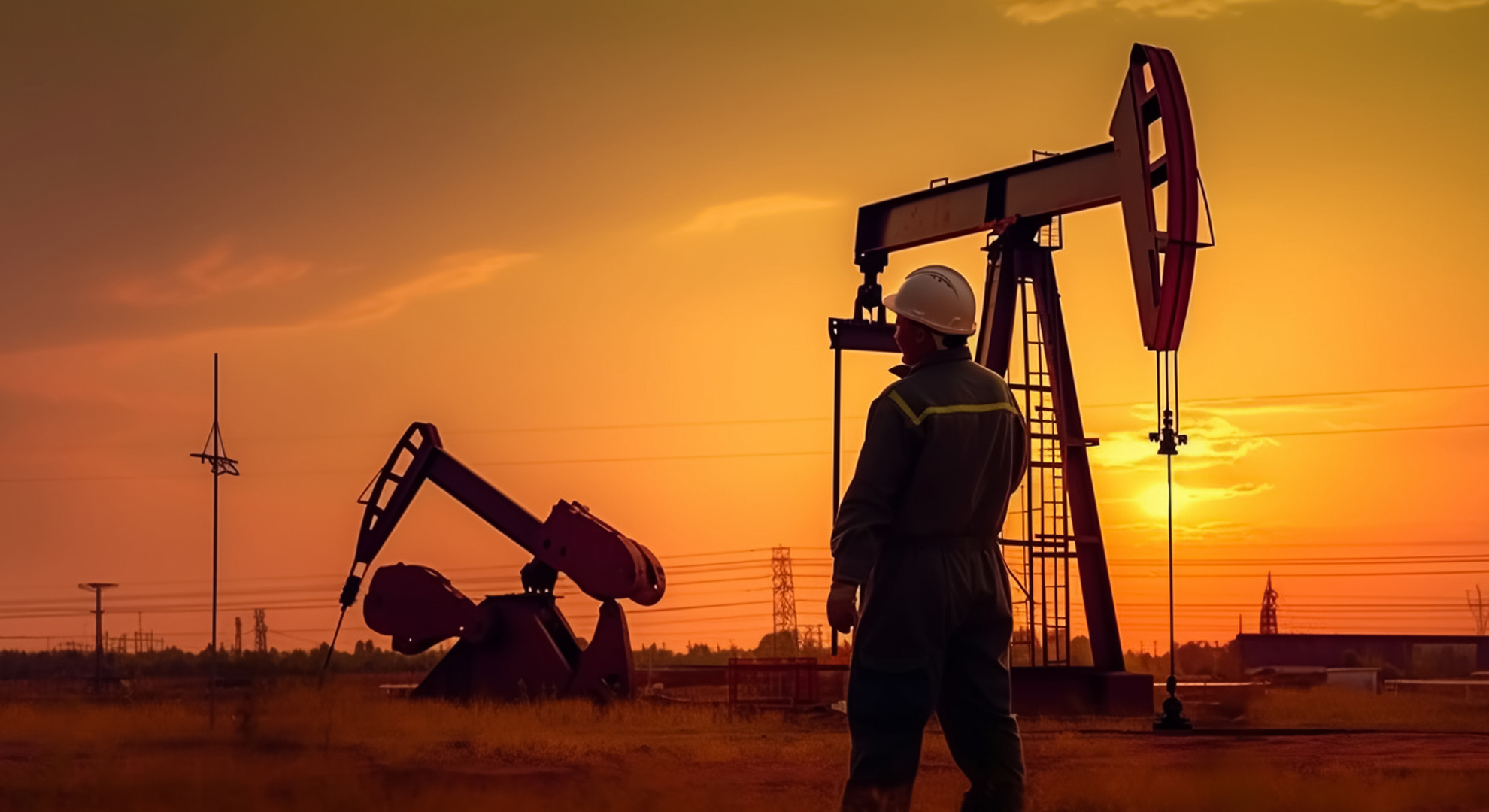
Nearly two weeks after the onset of perhaps the world's biggest oil crisis, due to a ”leaked” document, we learn that strategic oil stocks actually exist, but not in the country, but in fact are on paper, but in fact we now intend to check whether they exist, susține Dumitru Chisălță, președinte AEI, expert tehnic judiciar autorizat în România și agreat UE în domeniul Petrol și Gaze, în cadrul unei analize pe care o prezentăm integral în cele ce urmează.
”We don't know exactly about the stocks, but we want to declare a state of oil emergency, to use the stocks! But in fact if there are no quantity issues, then why declare a state of emergency?
We will attempt an analysis to understand the situation we are in”, says the author.
The false „oil emergency” issue”
One element that has caused confusion in the public debate is the idea that a state of emergency should be declared in the oil sector in order to cap the price of diesel or reduce excise duties. Legally, this statement is incorrect.
Price caps or excise tax cuts do not require a state of emergency
Under Romanian law, the state can intervene on prices through ordinary legislative instruments, without declaring an emergency situation.
Such tools are:
- emergency government ordinance;
- law adopted by Parliament;
- temporary margin trading rules or compensation schemes.
These mechanisms are common tools for economic policy and do not require the activation of an exceptional legal regime.
A concrete example exists even in Romania was in 2022, the state has introduced the 50 money per liter on fuel, without declaring an energy or oil emergency.
Therefore, price capping or compensation can normally be achieved by government decision or law.
What is the real role of a state of emergency in the oil sector?
Declaring an oil emergency has a completely different purpose. It is generally used when it exists:
- physical lack of fuel,
- blocking imports or transportation to Romania,
- Romania's supply collapse,
- need rationalization of consumption in Romania,
- controlled use of strategic stocks,
- distribution control and prioritization of critical sectors (military, public services, transportation).
The state of emergency is therefore an instrument of managing a real supply crisis, not a mechanism to regulate prices.
Why then the requirement to declare a state of emergency arises
In the context of recent discussions, the call for a state of emergency raises two possible hypotheses:
a) misunderstanding of the legal framework
Some political or administrative actors may be confused:
- economic policy measures (such as price caps)
- measures to manage a supply crisis.
This confusion is common in energy debates.
b) the existence of a genuine stock or supply problem which is hidden from the public
The second hypothesis is extremely serious, the request to declare a state of emergency could suggest that there is concerns about the real availability of oil stocks or ready access to them.
In this case, the problem would no longer be the price of fuel, but Romania's energy security.
This hypothesis becomes relevant in the context in which:
- a significant part of strategic stocks is stored outside Romania,
- there are mechanisms for delegation and ticketing,
- and public information about the actual location and accessibility of these stocks is limited.
Legally and economically:
- the diesel price cap does not require the declaration of a state of emergency;
- a state of emergency would be justified only if there is a real fuel supply crisis.
The emergence in public discourse of the idea of an „oil emergency” therefore raises a legitimate question: Is it just a legal confusion or is there a deeper problem related to Romania's strategic stocks and energy security?
This question becomes the starting point for this analysis on Romania's oil stock vulnerabilities.
Romania's real vulnerability does not seem to be the lack of a legal framework or the total lack of stocks, but the management of the situation:
- reliance on stocks held partly outside the country,
- low public transparency on their location and accessibility,
- dispersing responsibility between companies, the Ministry of Energy and the central storage entity,
- the risk that a „formally” fulfilled legal obligation may be more difficult to capitalize quickly in a logistical or military crisis.
In other words, the main problem is not necessarily that Romania does not have stocks, but the truth and the credibility of the authorities; whether these stocks are sufficiently accessible, controllable and mobilizable in a timely manner in a severe crisis. Romanian and EU law require exactly that, not just accounting existence, but also „physical accessibility”.
1. What types of stocks exist
Three different categories are frequently mixed up in public discussion.
A. Minimum / strategic / emergency stocks
Law 85/2018 defines „minimum stocks” as emergency stocks and/or specific stocks. The law also provides that minimum stocks shall be established and maintained in warehouses located within the territory of the European Union.
For the period from July 1, 2025 to June 30, 2026, the Order of the Minister of Energy set the level of emergency stocks at 2.034.712 tons of oil equivalent, calculated using the 90-day net imports method.
These are the relevant stocks in the event of a major crisis, supply bottleneck, war, embargo or serious disruption.
B. Commercial stocks
The law defines them as oil stocks held by economic operators which are not compulsory to maintain. They serve the daily functioning of the market.
In the public domain, the figure is around 1.2 million tons for the commercial stocks in Romania, but this figure is not found in a single official public and verified inventory..
C. Specific stocks / central entity stocks
The law also provides for the possibility of specific stocks and establishes a central storage entity. In its current form, the National Administration of State Reserves and Special Issues is designated as the central stockholding entity in Romania.
This component is important because it shifts some of the responsibility from commercial operators to a public mechanism on behalf of the state.
2. How many stocks Romania has in recent public data
Public statements in early March 2026 that Romania has over 2 million tons of fuel in strategic stocks and that approximately 56,86% The exact locations are not known (!!!), on the grounds that they are not made public for reasons of energy security (but they should be known by the institutions). Two weeks after the outbreak of the war and following an analysis by the AEI, checks were ordered. Should this not have been known before the war started?
That means, roughly:
- in Romania around 1.15-1.16 million tons of oil equivalent;
- outside Romania around 0.87-0.88 million tons of oil equivalent.
These figures are broadly consistent with the official level set by Order 622/2025.
3. Why it is vulnerable but not illegal for some stocks to be outside the country
Both Directive 2009/119/EC and Law No. 85/2018 allow minimum stocks to be held in other EU countries, subject to authorization and control conditions. The Romanian law expressly states that minimum stocks may be established and maintained in warehouses located within the territory of the European Union.
Moreover, Romanian law allows the delegation of the storage obligation:
- to the central storage entity in Romania,
- to central stockholding entities in other Member States,
- to other EU/EEA/Switzerland economic operators with the required authorizations.
The EU directive is also very clear on another point: delegation does not change the final obligation of the Member State. In other words, even if Romania delegates or accepts stocks in other countries, the responsibility for the system remains with the Romanian state.
4. What ticketing is and why it creates risk
„Ticketing” is, in essence, the contractual form whereby a storage obligation holder temporarily transfers to another entity the task of maintaining stocks on its behalf. In Romanian law it is referred to as „delegation of the storage obligation”.
Benefits
For companies and governments, the system makes economic sense:
- reduce storage costs,
- uses existing EU infrastructure,
- avoids investment in storage capacity.
Risks
This is where the vulnerability comes in:
- Logistical risk: the fuel may exist legally, but not be able to be brought to Romania quickly enough in a regional crisis. The directive itself stresses that physical accessibility must be taken into account.
- Geographical risk: if depots are in states on vulnerable routes or dependent on congested infrastructure, the actual mobilization time increases.
- Risk of opacity: if the public does not know where the stocks are, this is not necessarily illegal; but if the Romanian institutions do not have a clear and up-to-date operational picture, the vulnerability becomes serious. It has emerged in the public arena that the locations are not public and that checks need to be made.
- Risk of formal compliance: you can be „okay on paper” but ill-prepared for a real transportation crisis, sabotage or war.
5. Why it is surprising that Romania accepts this vulnerability
Your question is legitimate: why would a country with a major oil infrastructure agree to keep almost half of its strategic stocks abroad?
There are several possible, non-exclusive explanations:
A. Economic rationale
Offshore storage may be cheaper or more readily available contractually than using domestic capacity.
B. European legal structure
The EU system was designed for integrated market and solidarity, not national energy autarky. The directive allows the mobility of stocks within the EU.
C. Possible capacity and internal cost limits
The fact that Romania has refineries, terminals and a network does not automatically mean that it has, at reasonable cost and immediately available, sufficient separate strategic storage capacity, plus all the logistical and financial conditions.
D. Public policy oriented towards minimum compliance, not maximum resilience
This is perhaps the crux of the criticism. The state may be perfectly compliant with the legal minimum and yet suboptimal from a national security perspective.
E. A possible hidden profit externalization method in ticketing
There is a way to avoid paying taxes and duties in Romania in the form of ticketing and thus develop financial engineering.
6. The essential peculiarity of the Romanian law: 50% in Romania, 70% delegable
Law 85/2018 contains an important balance:
- storage obligation holders may delegate up to 70% of the quantity for which they are liable;
- but each holder must fulfill the obligation by constituting and maintaining, on the territory of Romania, a at least 50% of minimum stocks.
That means two things:
- The Romanian legislator explicitly recognized the risk of external dependence;
- the legislator also accepted that up to half of stocks may remain outside Romania.
Therefore, if the publicly announced percentage of 56,86% in Romania, the system seems, in aggregate, compatible with the domestic minimum threshold. But that doesn't eliminate the vulnerability; just show that it is legally permissible.
7. Is this weakening Romania's economic resilience?
On today's public data, one can argue that it exists:
- strategic vulnerability,
- possible governance deficiency,
- a possible political or administrative responsibility.
8. Who are the institutional responsible
Here systemic responsibility must be separated from criminal culpability.
A. Economic operators
They effectively constitute the emergency stocks. Order No 622/2025 expressly states that the minimum stocks shall be constituted by the economic operators who are holders of the stockholding obligation.
If an operator fails to build up or maintain stocks, the law provides for very high penalties, including fines of 1%-3% of turnover for certain misconduct. But in the absence of these checks (as it seems not to have happened in Romania), there may have been a certain tendency in Romania not to build up these stocks.
B. Ministry of Energy
The law defines it as competent authority.
That means the ministry has responsibility for:
- regulation,
- annual determination of stock levels,
- surveillance,
- authorization and coordination,
- participation in the development of emergency plans.
C. Central Storage Entity / ANRSPS
The law, in its current form, designates the National Administration of State Reserves and Special Problems as the central stockholding entity in Romania, on behalf of the Romanian state. Its role is to acquire, constitute, maintain and sell petroleum stocks for special situations.
D. Government as the holder of public policy
Legea spune explicit că nicio delegare nu modifică obligația statului român de a constitui stocuri la nivelul minim. Deci responsabilitatea ultimă de system belongs to the Romanian state, not just to private companies.
9. Who owns the stored oil and diesel
The law clearly suggests that ownership may belong to the holder of the obligation or to the delegated holder. This confirms that, legally, stocks are not automatically „state-owned” just because they are strategic. In many cases they are assets of the economic operators or of the entity holding them on behalf of the bondholder.
Therefore, even if the system serves national security, it is largely built on private or mixed ownership under public legal obligation.
10. The critical point: the state responds, but not enough control?
Here is one of the most sensitive issues. If the state responds and a significant part of the reserves remain outside the country, the legitimate question is: Does Romania have real security or just formal compliance?
11. Romania's main vulnerabilities
Vulnerability 1: legally allowed external dependency
Almost 501TPTP3T of the publicly announced strategic stocks are in other EU countries. Legal, yes; Strategic, no.
Vulnerability 2: physical accessibility, not just legal existence
The law and the directive insist on physical accessibility. In a regional crisis, the difference between „there is” and ”on paper” or „getting there on time” becomes decisive.
Vulnerability 3: Shared responsibility
The companies set up, the ministry regulates, the central entity administers, and the state is accountable in the end. When responsibility is shared, it's easier to create an accountability vacuum.
Vulnerability 4: lack of public trust
Statements that „there are over 2 million tons” followed by the idea ”that checks need to be made” fuels the perception that the state does not have sufficiently convincing operational control.
Vulnerability 5: priority given to minimum compliance
The system seems built to meet the minimum legal standard, not to maximize national energy autonomy.
Romania does not seem to lack strategic stocks; the problem is that the current model allows for significant structural vulnerability, as a large part of these stocks are located outside the country, and their real effectiveness in a severe crisis depends on accessibility, transportation, authorizations and institutional coordination.
This can be qualified as energy security weakness and possible governance deficiency.


