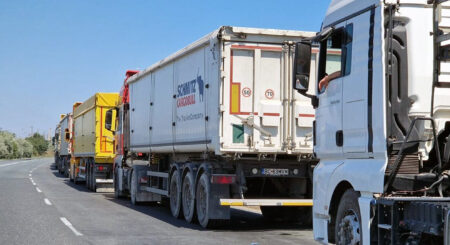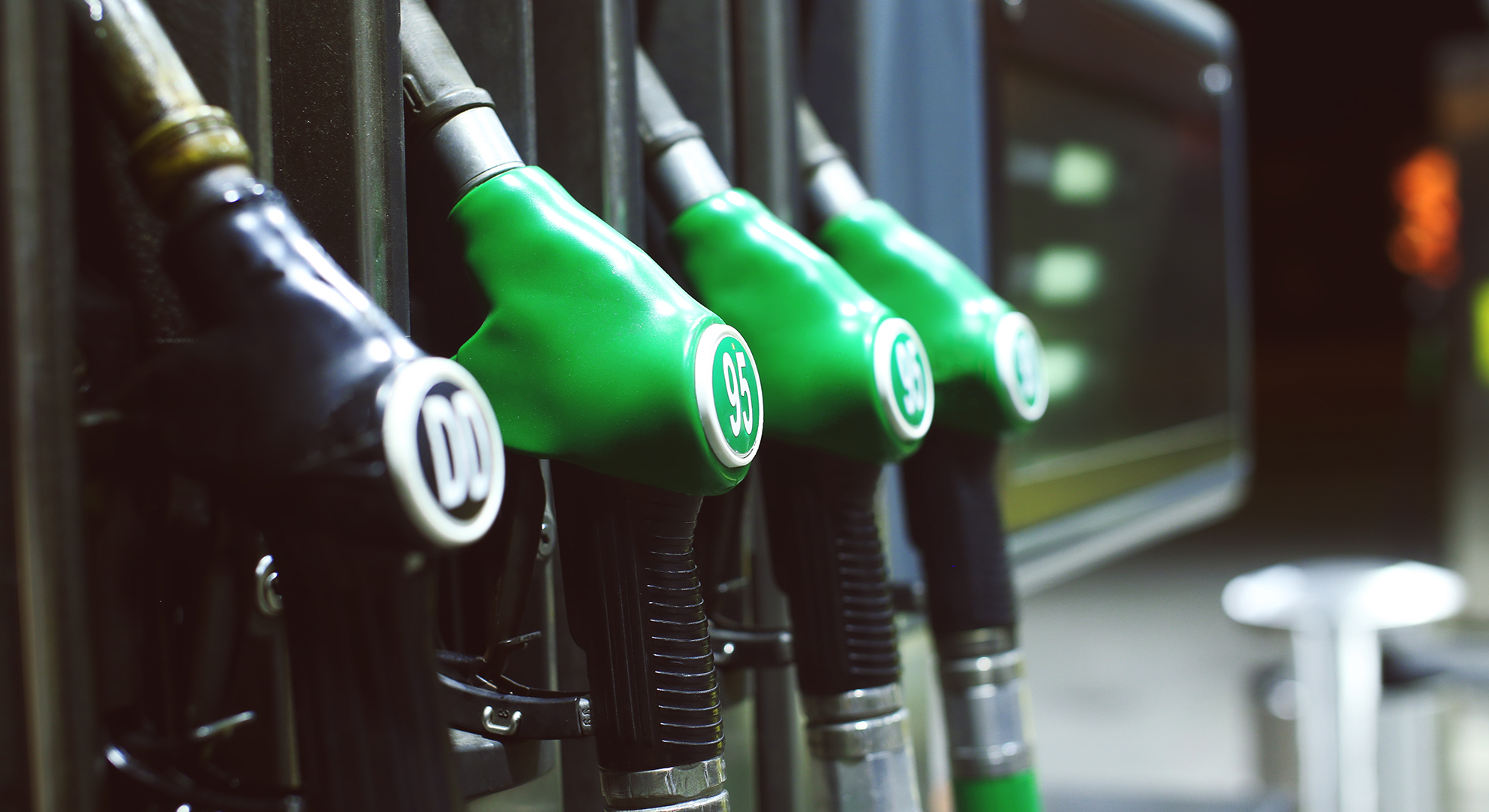
The National Union of Road Transport Operators in Romania (UNTRR) calls on the Government to urgently adopt measures to limit the impact of the increase in the price of diesel fuel on road transport and the economy.
Diesel represents about 401TPTP3T of the total cost of road transport, and an increase of 25% in fuel prices can directly increase transport costs by at least 10%. In the absence of support measures or competitive taxation, this pressure may affect the stability of logistic chains and the competitiveness of Romanian hauliers on the European market.
In this context, UNTRR calls for reducing the excise duty on diesel fuel to the European minimum level or, alternatively, extending it after the end of March 2026 until the end of the year and increasing the excise refund scheme for hauliers from 65 bani to 1.12 lei/liter.
The price of duty-free diesel was very similar between Member States, at around €0.80/liter in Romania, €0.81/liter in Hungary and Croatia, €0.81/liter in France and €0.89/liter in Germany, indicating that the differences in pump prices were mainly driven by the level of excise duties and VAT, the last ten days have seen very different developments in EU Member States, with increases of around 20% in most countries such as Austria, Czech Republic, France, Germany, Netherlands and up to 48% in Spain, while in Croatia and Slovenia the increases were below 2%, making the situation extremely volatile.
Currently, the excise duty on diesel in Romania is around 550 euro/1000 liters, significantly above the EU minimum of 330 euro/1000 liters. At the same time, other European countries are taking measures to limit the impact of rapidly rising fuel prices. In Portugal, for example, the government has decided to temporarily reduce excise duty on diesel, while in Italy, the Ministry of Economy has been analyzing for several days the possibility of activating the „mobile excise” mechanism, a system that allows the state to use the additional VAT revenues generated by the increase in fuel prices to reduce excise duties on gasoline and diesel.
The tax differences are already causing Romanian hauliers to fill up in other countries in the region, such as Hungary, Croatia, Slovenia or Bulgaria, which means losses for the Romanian budget.
Diesel price increases directly and significantly affect hauliers
To limit the effects on the economy in general, the UNTRR proposes two possible measures and a complementary one, depending on the evolution of fuel prices:
1. Reducing the excise duty on diesel from around 550 euro / 1000 liters to the European minimum of 330 euro / 1000 liters, a measure that could reduce the price of fuel by about 1.35 lei / liter (1.12 lei from excise duty and 0.23 lei from VAT).
2. In the absence of the excise tax reduction, UNTRR calls for the extension of the excise tax refund scheme at least until the end of the year and the increase of the amount refunded to 1.12 lei/liter.
In addition, the UNTRR proposes to resume the fuel compensation mechanism applied during the pandemic, by subsidizing fuel costs by 0.5 lei/liter, depending on the evolution of fuel prices.
UNTRR stresses that the stability of the transport sector depends on the predictability of fiscal policies.
Government cannot achieve predictability if it does not provide predictability. Without predictability, the market reacts with pessimistic scenarios and by moving supply to other countries.
Creșterea prețului la carburant și la energie, duce la o creștere accelerată a inflației și o frânare puternică a consumului, cu impact dramatic asupra companiilor de transport care nu își vor mai putea acoperi costurile de funcționare.
In these conditions, it is necessary to transfer the fuel cost increases from the transport companies to the clients, otherwise the transport companies, if they will not be able to cover their variable costs and even less their fixed costs, in the conditions of decreasing volumes, will be condemned to a rapid bankruptcy, taking into account that the road transport industry in Romania operates with a margin of less than 5%.
In Romania, for an annual consumption of 8.6 billion liters of diesel fuel, the state aims to collect 24 billion lei for an excise tax on diesel fuel of 2804.29 lei/1000 liters, while for the 2 billion liters of gasoline, at 3059.9 lei/1000 liters, the state aims to collect about 6 billion lei. In Romania, excise duties are the taxes with the highest collection rate. Recall the density of diesel 0.845 kg/l and gasoline 0.77 kg/l, to avoid confusion with the reporting of fuel excise duty per ton.
Today Romania's diesel is 22 eurocents/liter more expensive than in Hungary after VAT deduction of 27% and partial refund of Hungarian excise duty - which is being carried out precisely on schedule, providing good predictability for hauliers.