





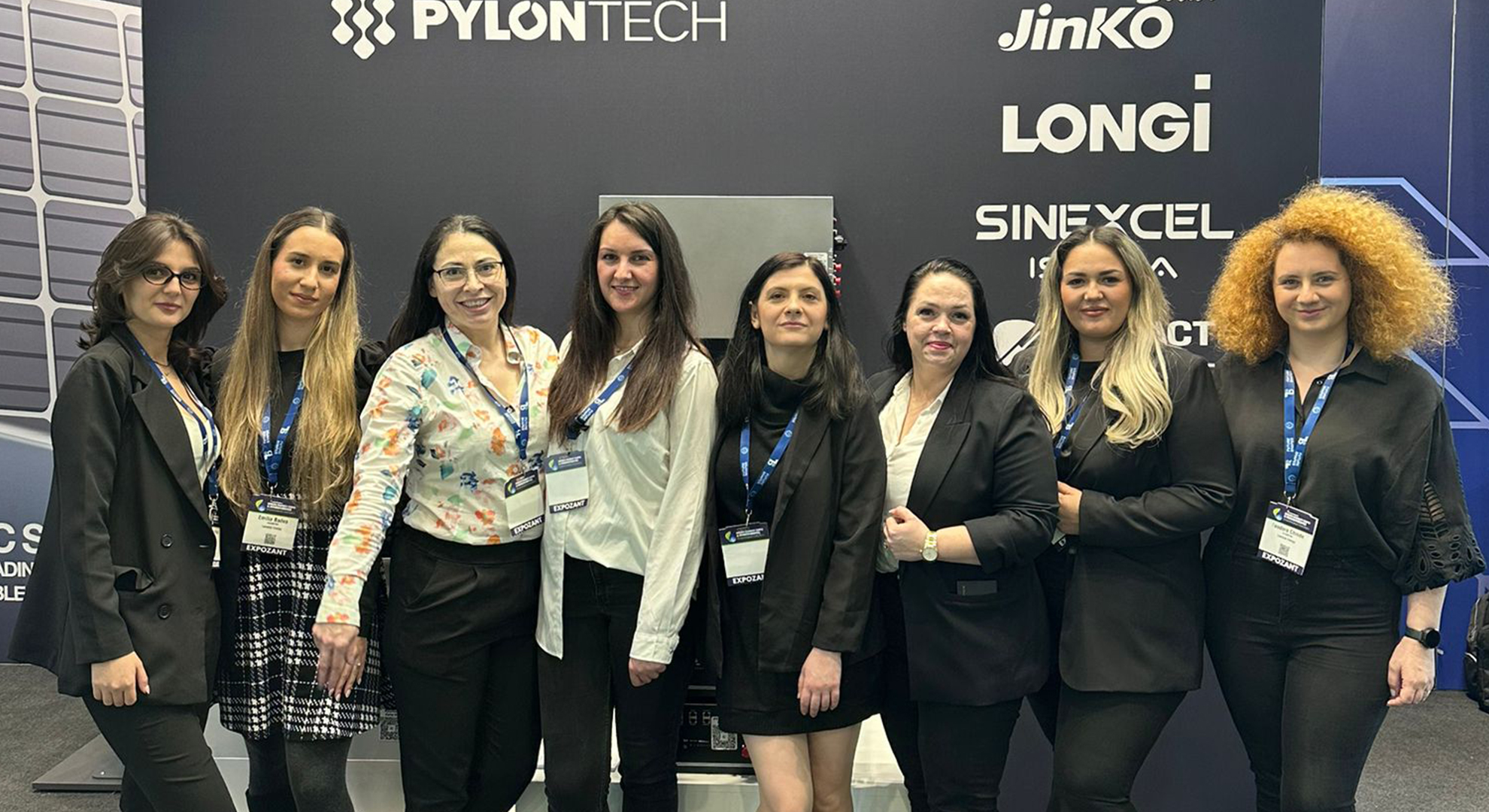
The structure of the photovoltaic market in Romania is gradually changing, with an increasing share of commercial and utility projects, while the residential segment remains strongly influenced by financing programs. The residential segment reacts quickly to these mechanisms, with periods of accelerated growth or blockages, while utility-scale projects have longer development cycles and are influenced by factors such as financing, grid infrastructure, and economic feasibility. In an exclusive interview with IndustryNews.ro, Cristian Lefter, CEO of Lemetal Energy, states that this evolution comes against the backdrop of market maturation and a shift towards more complex and more stable medium-term projects.
How was the product portfolio built and what are the criteria for selecting manufacturers?
The portfolio was built gradually, starting from the real market needs and client profiles – installers, EPCs, and developers. The strategy was not rapid brand expansion, but the development of a coherent and sustainable offering, where each product can be easily integrated into projects and operationally supported.
Producer selection is based on criteria such as product quality, company stability, delivery capacity, technical and commercial support, as well as brand bankability. In practice, predictability, correct documentation, and the ability to support the market long-term become decisive factors.
What segments are currently generating the most demand for equipment – residential, C&I, or utility – and how has this structure changed in recent years?
A clearer growth is observed in the C&I and utility segments, while the residential sector remains active, but more sensitive to the legislative context and financing programs. In recent years, the residential sector has experienced periods of accelerated growth, supported by subsidies and interest in energy independence.
In parallel, the C&I segment matured, and utility projects began to gain larger weight as investors gained confidence in the market's direction.


How much is the demand for equipment influenced by residential subsidy programs compared to the development of utility-scale projects?
The residential segment reacts quickly to financing programs: when they function predictably, demand accelerates, and in periods of uncertainty, immediate blockages occur. For this reason, the residential market is more volatile and requires rapid adaptation from all involved stakeholders.
Instead, utility-scale projects have longer development cycles and are influenced by factors such as financing, grid infrastructure, and economic feasibility, which gives them more medium-term stability.
What types of products or technologies do you observe are growing the fastest in the portfolio?
The most visible growth is in the area of storage solutions and equipment associated with more complex systems, for both residential and commercial applications. At the same time, there is growing interest in reliable products with consistent performance and easy integration into projects.
This evolution is driven by the growing interest in self-consumption, the need to optimize consumption, and concerns about grid stability. The market is no longer just seeking installed capacity, but complete and predictable solutions.
In your experience, what are the characteristics of brands that perform best in the Romanian market?
The best-performing brands are those that successfully combine price with reliability and support. Price can open a discussion, but it is not enough to build continuity.
The final decision is increasingly influenced by post-sale experience, ease of use, and the supplier's ability to support the product long-term. Availability, quality consistency, technical compatibility, and bankability are becoming essential criteria, especially in large-scale projects.
After the boom in photovoltaic installations and the increased interest in storage, what do you think will be the next wave of demand in the equipment market?
The next wave of demand will come from integrated solutions and market professionalization. It will no longer be just about selling equipment, but about delivering a complete package: panels, inverter, batteries, structure, monitoring, and support.
As systems become more complex, the differentiator will be the ability to simplify these solutions for the customer. Opportunities are also emerging in the area of commercial applications, hybrid systems, and energy management, against a backdrop of a market increasingly focused on real returns and predictability.
The company will be present at the Solar Energy Bucharest Summit, organized from April 22–23, 2026, at the Palace of the Parliament.


