Technical recession, defined as two consecutive quarters of falling GDP, has occurred several times in the last two years, says analyst Adrian Negrescu. The stagnation of the economy occurs in parallel with an inflationary spike, a phenomenon called stagflation. After the NSI announcement, commercial banks lowered their growth forecasts for 2026 to 0.6% (ING) -maximum1% (BCR).
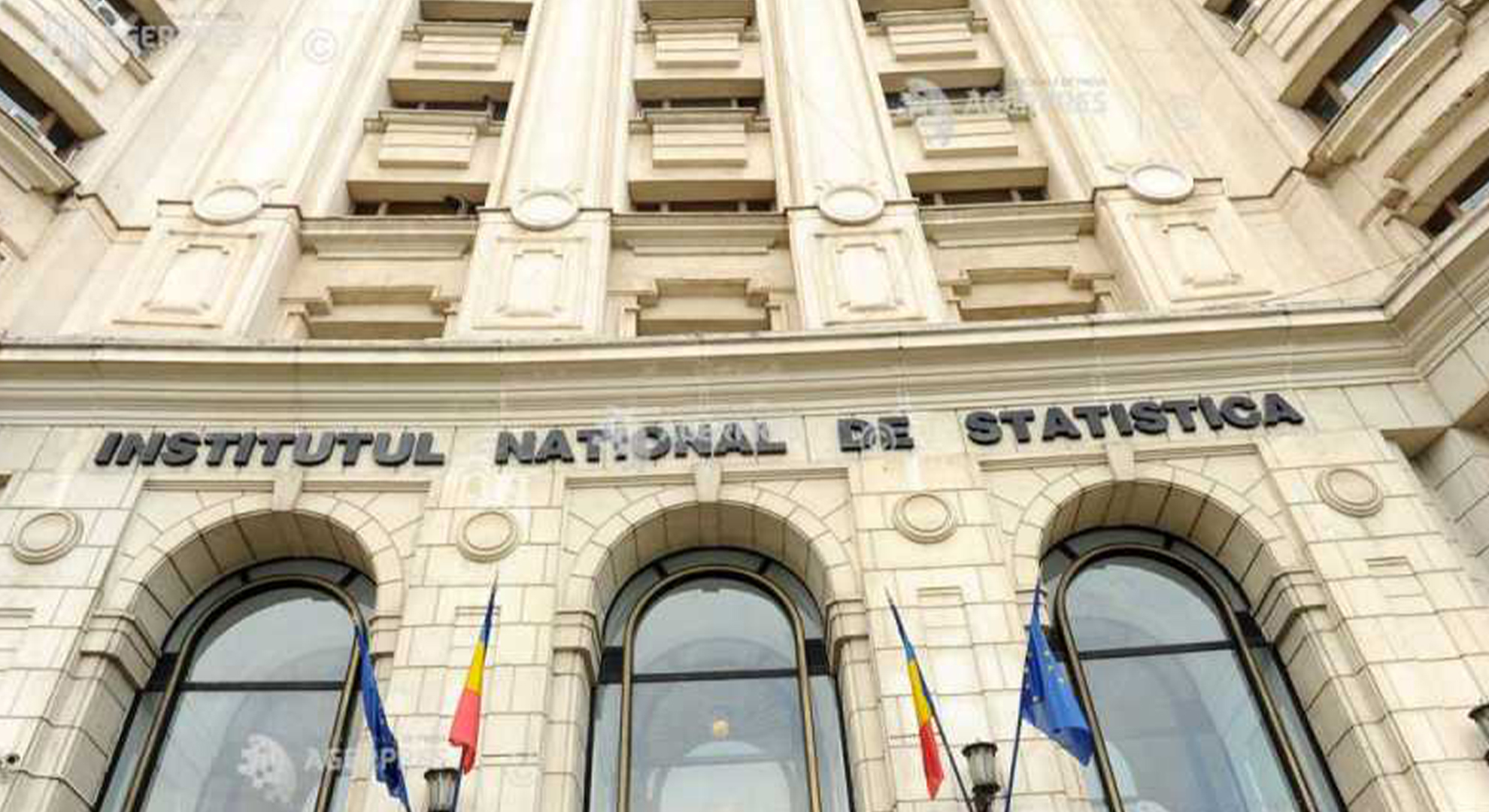
Romania's economy grew by 0.6% in 2025, but ended the year in a technical recession after Gross Domestic Product (GDP) was 1.9% lower in the fourth quarter compared to the third quarter of 2025, the second consecutive quarter of decline, according to signal data released on Friday by the National Institute of Statistics (NSI).
Romania is going through a prolonged technical recession due to inconsistent fiscal policies in recent years, but the downward trend in inflation and the prospect of lower monetary policy interest rates may create conditions for a resumption of economic growth in the second half of 2026, says economic consultant Adrian Negrescu.
„Avertismentele pe care le lansam în urmă cu doi ani s-au transformat astăzi în realitate statistică. Institutul Național de Statistică a confirmat ceea ce politicienii au negat vehement până acum: România traversează o recesiune tehnică prelungită, efect direct al politicilor fiscale incoerente aplicate de guvernările de la Palatul Victoria, fără excepții. Cifrele sunt reci și implacabile – în ultimii doi ani, economia a înregistrat nu mai puțin de cinci trimestre de scădere: primele două din 2024, urmate de trimestrele 1, 3 și 4 din 2025”, a scris Adrian Negrescu pe Facebook, într-un comentariu intitulat: „Cronica unei recesiuni anunțate: Cum au îngropat ‘invențiile fiscale’ economia României și ce urmează în 2026”, citat de Agerpres.
The economic reality shows, without any doubt, that the business environment has been systematically strangled for four years, Negrescu believes.
In his opinion, the „fiscal gimmicks” and superimposed taxes have not brought prosperity to the budget, but have generated an inherent setback. Thus, for the population, the technical term „recession” translates simply: there is not enough money to live decently.
„Soaring energy bills, food prices and tax burdens have massively eroded purchasing power, turning statistics into daily hardship for millions of Romanians,” the economic consultant said.
For his part, Adrian Codirlașu, president of the CFA Romania, says that Romania is in a stagflationary situation, i.e. an economy stagnating with high inflation, a situation caused by public spending out of control in previous years, and the solution is to reduce it.
„Somehow to be expected given the sharp fall in consumption in the fourth quarter. Corroborated with what happened in Q3 versus Q2, it's true, it's borderline. But that it's minus, it's a minus 0.1, whatever, adjusted from minus 0.2 in previous reporting. The textbook definition is a technical recession, meaning two consecutive quarters of falling GDP. But if we look at the whole of 2025, we see GDP growth of 0.61Q3Q3, down from 2024, but on the plus side, whatever. This is the situation we are in. The problem is that we are in a stagflationary situation, i.e. a stagnating economy with high inflation, close to 10%. What has caused this? Fiscal policy, in particular what happened in 2023 and 2024, which led us to budget deficits that are completely unsustainable and need to be corrected. Now the discussion is how to correct, and who pays for the correction. As the current situation is caused by the increase in public spending, because public spending has been increasing for the last 4-5 years, that is where the correction has to be made. In the last four years we have had at least one episode, if not more, of tax increases every year, and every time there were promises of cuts in public spending, which did not happen. So the solution is to reduce the deficit by cutting spending, because spending has brought us to this situation, that's where the correction has to be”Adrian Codirlașu told Agerpres on Friday.
Q4 GDP downturn to blame for technical recession
In the third quarter, Romania's economy recorded a decline of 0.21 Q3Q3, compared with the previous quarter, INS data show.
According to NSI data, on seasonally adjusted data, in the fourth quarter of 2025, compared to the previous quarter, GDP decreased by 1.9%. Compared to the same quarter of 2024, GDP decreased by 1.6%.
On a gross basis, compared to the same quarter in 2024, Gross Domestic Product in Q4 2025 has increased by 0.11Q3Q3, or 0.11Q3Q3.
In 2025, compared to 2024, Gross Domestic Product increased by 0.6%.
„Following the revision of the gross series of quarterly GDP by including the estimate of Gross Domestic Product for Q4 2025 in the quarterly series, the seasonally adjusted series has been recalculated, the volume indices being revised compared to the second provisional version of Gross Domestic Product for Q3 2025, published in the press release no. 6 of January 9, 2026, as follows: the results for the first quarter of 2025, compared to the fourth quarter of 2024, have been revised from 100.1% to 99.4%; the results for the second quarter of 2025, compared to the first quarter of 2025, have been revised from 101.1% to 101.0%; the results for the third quarter of 2025, compared to the second quarter of 2025, have been revised from 99.8% to 99.9%. Seasonally adjusted series are recalculated quarterly in line with European practice”, reads the INS release.
The International Monetary Fund estimated in October last year an economic growth of up to 1% for Romania in 2025, while the World Bank predicted in its January 2026 report an increase of 0.8% for 2025, according to Agerpres.
In its latest report published in November last year, the European Commission lowered its forecasts for the Romanian economy's growth to 0.7%.